


Portal:Somerset

The Somerset Portal

Somerset (/ˈsʌmərsɛt, -sɪt/ ⓘ SUM-ər-set, -sit), archaically Somersetshire (/ˈsʌmərsɛt.ʃɪər, -sɪt-, -ʃər/ SUM-ər-set-sheer, -sit-, -shər), is a ceremonial county in South West England. It is bordered by the Bristol Channel, Bristol, and Gloucestershire to the north, Wiltshire to the east, Dorset to the south-east, and Devon to the south-west. The largest settlement is the city of Bath.
Somerset is a predominantly rural county, especially to the south and west, with an area of 4,171 km2 (1,610 sq mi) and an estimated population of 1,012,934 in 2024. Bath is in the north-east of the county, Yeovil in the south-east, Taunton in the south-west, and the seaside resort of Weston-super-Mare in the north-west. The city of Wells, the second-smallest city by population in England, is located in the centre. For local government purposes, the county comprises three unitary authority areas: Bath and North East Somerset, North Somerset, and Somerset. Bath and North East Somerset Council is a member of the West of England Combined Authority.
The centre of Somerset is dominated by the Levels, a coastal plain and wetland. The north-east contains part of the Cotswolds uplands and all of the Mendip Hills, which are both national landscapes; the west contains the Quantock Hills and part of the Blackdown Hills, which are also national landscapes, and most of Exmoor, a national park. The major rivers of the county are the Avon, which flows through Bath and then Bristol, and the Axe, Brue, and Parrett, which drain the Levels.
There is evidence of Paleolithic human occupation in Somerset, and the area was subsequently settled by the Celts, Romans and Anglo-Saxons. The county played a significant part in Alfred the Great's rise to power, and later the English Civil War and the Monmouth Rebellion. In the later medieval period, its wealth allowed its monasteries and parish churches to be rebuilt in grand style; Glastonbury Abbey was particularly important, and claimed to house the tomb of King Arthur and Guinevere. The city of Bath is famous for its Georgian architecture, and is a UNESCO World Heritage Site. The county is also the location of Glastonbury Festival, one of the UK's major music festivals. (Full article...)
Selected article

The Baths are a major tourist attraction and, together with the Grand Pump Room, receive more than one million visitors a year, with 1,037,518 people during 2009. It was featured on the 2005 TV program Seven Natural Wonders as one of the wonders of the West Country. Visitors can see the Baths and Museum but cannot enter the water. An audio guide is available in several languages.
In 2009 a grant of £90,000 was made to Bath and North East Somerset Council to contribute towards the cost of re-developing displays and improving access to the Roman Baths, by the Department for Culture, Media and Sport/Wolfson Fund, which was established to promote improvements in Museums and Galleries in England. (Full article...)
Selected biography -
Savaric fitzGeldewin (died 8 August 1205) was an Englishman who became Bishop of Bath and Glastonbury in England. Related to his predecessor as well as to Emperor Henry VI, he was elected bishop on the insistence of his predecessor, who urged his election on the cathedral chapter of Bath. While bishop, Savaric spent many years attempting to annexe Glastonbury Abbey as part of his bishopric. Savaric also worked to secure the release of King Richard I of England from captivity when the king was held by Emperor Henry VI. (Full article...)
Districts of Somerset

- Somerset (Unitary)
- North Somerset (Unitary)
- Bath and North East Somerset (Unitary)
Subcategories

Related portals


Selected images
-
 Tyntesfield. (from Culture of Somerset)
 -
 Stone quarries are still a major employer in Somerset (from Somerset)
 -
 The Avon Gorge, the historic boundary between Gloucestershire and Somerset, and also Mercia and Wessex; Somerset is to the left (from Somerset)
 -
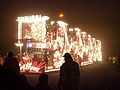 "Samurai" by Griffens CC, at Burnham on Sea Carnival 2006, part of the West Country Carnival circuit (from Culture of Somerset)
 -
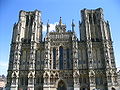 The west front of Wells Cathedral (from Culture of Somerset)
 -
 Sand Sculpture at Weston-super-Mare Sand Sculpture Festival of A Midsummer Nights Dream (from Culture of Somerset)
 -
 The flag designed to represent the historic county of Somerset in 2013 (from Somerset)
 -
The west front of Wells Cathedral (from Somerset)
-
Tyntesfield (from Somerset)
-
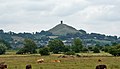 Glastonbury Tor (from Culture of Somerset)
 -
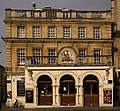
-
 The town of Glastonbury looking west from the top of Glastonbury Tor. The fields in the distance are the Somerset Levels. (from Somerset)
 -

-
 The Exmoor landscape with the native Exmoor Pony (from Somerset)
 -
 The ceremonial county immediately prior to the 2023 local government restructuring, with South Somerset (1), Somerset West and Taunton (2), Sedgemoor (3) and Mendip (4) as non-metropolitan districts (shown in pink), and just Bath and North East Somerset (5), and North Somerset (6) as unitary authorities (shown in yellow). (from Somerset)
 -
 The Dunster Yarn Market was built in 1609 for the trading of local cloth. (from Somerset)
 -
 Brean Down from Steep Holm (from Somerset)
 -
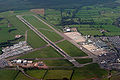 Bristol Airport, which is located in North Somerset (from Somerset)
 -
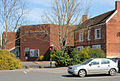 Brewhouse Theatre, Taunton (from Culture of Somerset)
 -
 A map of the county in 1646, author unknown (from Somerset)
 -

-

-
-
 A traditional cider apple orchard at Over Stratton, with sheep grazing (from Somerset)
 -
 A steam locomotive and carriages, on the West Somerset Railway, a heritage line of notable length, in spring 2015 (from Somerset)


_from_the_tor_arp.jpg)


.jpg)

_down_South_Wales_Pullman.JPG)
Selected settlement

Co-ordinates 51°24′49″N 2°29′48″W / 51.4135°N 2.4968°W
Keynsham /ˈkeɪnʃəm/ is a town and civil parish between Bristol and Bath. It has a population of 15,533. It was listed in the Domesday Book as Cainesham, which is believed to mean the home of Saint Keyne.
The site of the town has been occupied since prehistoric times and is scattered with Roman remains. It became a medieval market town, after Keynsham Abbey was founded around 1170. It is situated at the confluence of the River Chew and River Avon and was subject to serious flooding before the creation of Chew Valley Lake and river level controls at Keynsham Lock. The Great Flood of 1968 inundated large parts of the town. It was home to the Cadbury's chocolate factory, Somerdale, which opened in 1935 as a major employer in the town.
It is home to Memorial Park, which is used for the annual town festival and several nature reserves. The town is served by Keynsham railway station on the London-Bristol and Bristol-Southampton trunk routes and is close to the A4 road which bypassed the town in the 1964. There are also a range of schools, religious sporting and cultural clubs and venues. (Full article...)
Did you know...
From Wikipedia's "Did You Know" archives:
.JPG)
- ... that in 1907, the medieval Great Hall of Lytes Cary manor house (pictured) was being used as a cider store?
- ... that Brian Rose was Somerset County Cricket Club's most successful captain, leading the side to five one-day trophies in as many years?
- ... that Long Ashton Research Station closed in 2003 having served agriculture and horticulture for exactly 100 years?
- ... that stained glass in Marston Bigot church in Somerset, England is from the abbey of Altenberg in Germany and depicts a scene from the early life of St Bernard?
- ... that Richard Perceval, who was born at Nailsea Court,
Things you can do
 |
Here are some tasks awaiting attention:
|
WikiProjects
Nearby projects: WikiProject Bristol, WikiProject Devon, WikiProject Dorset, WikiProject Wiltshire
Topics

Recognised content
 | This is a list of recognized content, updated weekly by JL-Bot (talk · contribs) (typically on Saturdays). There is no need to edit the list yourself. If an article is missing from the list, make sure it is tagged (e.g. {{WikiProject Somerset}}) or categorized correctly and wait for the next update. See WP:RECOG for configuration options. |
Featured articles
 Ælfheah of Canterbury
- Bath, Somerset
- Battle of Babylon Hill
- Battle of Marshall's Elm
- Margaret Bondfield
- Martha Bradley
- Robert Burnell
- Chew Stoke
- Equestrian statue of Edward Horner
- Exmoor
- Ham Wall
- Herbie Hewett
- Henry Irving
- Kennet and Avon Canal
- Mells War Memorial
- Mendip Hills
- Lionel Palairet
- Porlock Stone Circle
- River Parrett
- Sieges of Taunton
- Somerset County Cricket Club in 1891
- Somerset County Cricket Club in 2009
- Somerset Levels
- Sweet Track
- Marcus Trescothick
- Wells Cathedral
- Withypool Stone Circle

Featured lists
- List of ecclesiastical parishes in the Diocese of Bath and Wells
- Works of Keith Floyd
- Grade I listed buildings in Bath and North East Somerset
- Grade I listed buildings in Mendip
- Grade I listed buildings in North Somerset
- Grade I listed buildings in Sedgemoor
- Grade I listed buildings in South Somerset
- Grade I listed buildings in Taunton Deane
- Grade I listed buildings in West Somerset
- Grade II* listed buildings in North Somerset
- List of civil parishes in Somerset
- List of English Heritage properties in Somerset
- List of locks on the Kennet and Avon Canal
- List of Sites of Special Scientific Interest in Avon
- List of Sites of Special Scientific Interest in Somerset
- List of Somerset County Cricket Club Twenty20 players
- List of Somerset County Cricket Club grounds
- List of Somerset County Cricket Club players with 100 or more first-class or List A appearances
- List of churches preserved by the Churches Conservation Trust in Southwest England
- List of hillforts and ancient settlements in Somerset
- List of local nature reserves in Somerset
- List of scheduled monuments in Bath and North East Somerset
- List of scheduled monuments in Mendip
- List of scheduled monuments in North Somerset
- List of scheduled monuments in Sedgemoor
- List of scheduled monuments in South Somerset
- List of scheduled monuments in Taunton Deane
- Grade II* listed buildings in Mendip
- List of museums in Somerset
- List of national nature reserves in Somerset
- List of National Trust properties in Somerset
- List of scheduled monuments in West Somerset (A–G)
- List of scheduled monuments in West Somerset (H–Z)
- Grade II* listed buildings in Sedgemoor
- Grade II* listed buildings in Taunton Deane
- Grade II* listed buildings in West Somerset
Featured topics

Good articles
 A303 road
- 1754 Taunton by-election
- 1887 Taunton by-election
- The Abbot's Fish House, Meare
- Agapemonites
- William Arnold (settler)
- Ashton Court
- Ashton Court Festival
- Athelm
- Herbert E. Balch
- Barrington Court
- E. W. Bastard
- Bath Abbey
- Bath Assembly Rooms
- Beckford's Tower
- Berhtwald
- Birnbeck Pier
- Bishop's Palace, Wells
- Blagdon Lake
- John Braham (RAF officer)
- Brean Down
- HMS Bridgewater (L01)
- Bridgwater and Taunton Canal
- Bridgwater Bay
- Bridgwater
- Brislington House
- Bruton Dovecote
- Buildings and architecture of Bath
- Burnham-on-Sea
- Mike Burns (cricketer)
- Burrow Mump
- Burton Pynsent House
- Jenson Button
- Allegra Byron
- Cadbury Camp
- Cadbury Castle, Somerset
- Cheddar, Somerset
- Chew Magna
- St Andrew's Church, Chew Stoke
- Claverton Pumping Station
- Cleeve Abbey
- Clevedon
- Clevedon Pier
- Cleveland Pools
- Clifton Suspension Bridge
- Climate of south-west England
- Coleridge Cottage
- The Crescent, Taunton
- Cricket at the 1900 Summer Olympics
- Crook Peak to Shute Shelve Hill
- Dolebury Warren
- Dovecot at Blackford Farm
- Dunkery Hill
- Dunstan
- Dunster Butter Cross
- Dunster Castle
- Dunster Working Watermill
- Ebbor Gorge
- Exmoor pony
- Farleigh Hungerford Castle
- Reginald Fitz Jocelin
- Savaric FitzGeldewin
- Henry Fownes Luttrell (died 1780)
- Henry Fox (sportsman)
- Frome
- Fyne Court
- Gallox Bridge
- Edith Garrud
- Geography of Somerset
- Geology of Somerset
- Gisa (bishop of Wells)
- Eleanor Glanville
- Glastonbury Abbey
- Glastonbury Canal
- Glastonbury Festival
- Glastonbury
- Glastonbury Lake Village
- Glastonbury Tor
- Grade I listed buildings in Somerset
- Grand Western Canal
- HM Prison Shepton Mallet
- Hestercombe House
- James Hill (British Army officer)
- Sidney Hill
- Holnicote Estate
- Hot Fuzz
- Jocelin of Wells
- John of Tours
- Kelston toll road
- Keynsham
- King Alfred's Tower
- King John's Hunting Lodge, Axbridge
- Scott Laird
- Leigh Court
- Leigh Woods National Nature Reserve
- Long Ashton railway station
- Lyfing (archbishop of Canterbury)
- Lytes Cary
- Masonic Hall, Taunton
- Midsomer Norton
- Minehead
- Monmouth Rebellion
- Montacute House
- Muchelney Abbey
- Nailsea & Backwell railway station
- Nailsea Court
- Nailsea
- Nettlecombe Court
- Stephen Newton
- Tom Nichols (footballer)
- Nunney Castle
- Pill railway station
- PinkPantheress
- Portishead, Somerset
- Massey Poyntz
- The Priest's House, Muchelney
- Prior Park Landscape Garden
- Prior Park
- Pulteney Bridge
- Radstock
- River Brue
- River Tone
- Robert of Bath
- Roman Baths (Bath)
- Royal Crescent
- Ted Sainsbury
- St Catherine's Court
- Sand Point and Middle Hope
- Scheduled monuments in Somerset
- Jake Seamer
- Shepton Mallet
- Sigeric (bishop)
- Sir Bevil Grenville's Monument
- Solsbury Hill
- Somerset Coalfield
- Somerset County Cricket Club in 1882
- Somerset County Cricket Club in 1885
- Somerton, Somerset
- Stanton Drew stone circles
- Steep Holm
- Stembridge Mill, High Ham
- Stoke sub Hamdon Priory
- Ston Easton Park
- Stoney Littleton Long Barrow
- Street, Somerset
- Sutton Court
- Sydney Gardens
- St Joseph's Convent, Taunton
- Taunton
- Taunton Unitarian Chapel
- Team Bath F.C.
- Theatre Royal, Bath
- Tintinhull Garden
- To Catch a Copper
- Treasurer's House, Martock
- Hugh Trenchard, 1st Viscount Trenchard
- The Tribunal, Glastonbury
- Tyntesfield
- Vicars' Close, Wells
- Walton and Ivythorn Hills
- Watchet
- Wellington Monument, Somerset
- Wellington, Somerset
- Hugh of Wells
- Wells, Somerset
- West Hendford Cricket Ground
- West Pennard Court Barn
- West Somerset Mineral Railway
- West of England line
- Westhay Moor
- Weston-super-Mare
- Westonzoyland Pumping Station Museum
- Edward Wickham
- Maisie Williams
- Woodspring Priory
- Wookey Hole Caves
- Worle railway station
- Worlebury Camp
- Wulfhelm
- Yarn Market, Dunster
- Yatton railway station
- Yeovil

Good topics

Associated Wikimedia
The following Wikimedia Foundation sister projects provide more on this subject:
-
 Commons
Free media repository -
 Wikidata
Free knowledge base -
 Wikiquote
Collection of quotations -
 Wikisource
Free-content library -
 Wikiversity
Free learning tools -
 Wikivoyage
Free travel guide -
 Wiktionary
Dictionary and thesaurus


