


Portal:Lancashire

The Lancashire Portal

Lancashire (/ˈlæŋkəʃər/ LANG-kə-shər, /-ʃɪər/ -sheer; abbreviated Lancs) is a ceremonial county in North West England. It is bordered by Cumbria to the north, North Yorkshire and West Yorkshire to the east, Greater Manchester and Merseyside to the south, and the Irish Sea to the west. The largest settlement is the city of Preston.
The county has an area of 3,079 square kilometres (1,189 sq mi) and had an estimated population of 1,601,645 in 2024. Preston and Blackburn are near the centre of the county, Burnley is in the east, the seaside resort of Blackpool on the coast in the west, and the city of Lancaster in the north. For local government purposes the county comprises a non-metropolitan county, with twelve districts, and two unitary authority areas: Blackburn with Darwen and Blackpool. Lancashire County Council and the two unitary councils collaborate through the Lancashire Combined County Authority. The county historically included the Furness and Cartmel peninsulas of Cumbria, northern Greater Manchester and Merseyside, and Warrington, but excluded the eastern part of the Forest of Bowland. (Full article...)
Selected article -

The trials of the Pendle witches in 1612 are among the most famous witch trials in English history, and some of the best recorded of the 17th century. The twelve accused lived in the area surrounding Pendle Hill in Lancashire, and were charged with the murders of ten people by the use of witchcraft. All but two were tried at Lancaster Assizes on 18–19 August 1612, along with the Samlesbury witches and others, in a series of trials that have become known as the Lancashire witch trials. One was tried at York Assizes on 27 July 1612, and another died in prison. Of the eleven who went to trial – nine women and two men – ten were found guilty and executed by hanging; one was found not guilty.
The official publication of the proceedings by the clerk to the court, Thomas Potts, in his The Wonderfull Discoverie of Witches in the Countie of Lancaster, and the number of witches hanged together – nine at Lancaster and one at York – make the trials unusual for England at that time. It has been estimated that all the English witch trials between the early 15th and early 18th centuries resulted in fewer than 500 executions; this series of trials accounts for more than two per cent of that total. (Full article...)
Topics
Related portals


Recognised content
Featured Articles:
 Blackburn Olympic F.C., Pendle witches, Samlesbury witches
Featured Lists:
List of Nelson F.C. seasons, Listed buildings in Rivington
Good Articles:
 1920–21 Burnley F.C. season, 1922–23 Nelson F.C. season, East Lancashire Railway 1844–1859, Henry of Grosmont, 1st Duke of Lancaster, Preston railway station, River Irwell, Rivington, Stonyhurst College, Turf Moor, William Sudell
General images -
-
 British Coalfields (from Lancashire Coalfield)
 -
 John Speed's map of the County Palatine of Lancaster, 1610 (from History of Lancashire)
 -
 Lancashire, nicknamed "The Red Rose County" within England, showing ancient extent (from History of Lancashire)
 -
 Eccles cake and Lancashire cheese at a restaurant (from Lancashire cheese)
 -
 Map of mid-Lancashire, c. 400. (from History of Lancashire)
 -
 A Chorley cake (left) and an Eccles cake (right) (from Chorley cake)
 -
 Spoil heaps or "rucks" at Wharton Hall Colliery, Little Hulton (from Lancashire Coalfield)
 -
 Southwest Lancashire in 1610. (from History of Lancashire)
 -
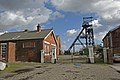 Astley Green Colliery, offices and headgear (from Lancashire Coalfield)
 -
 Parsonage Colliery in 1980 (from Lancashire Coalfield)
 -
 Monument to James Anderton OBE, inventor of the power shearer, sited in St.Helens (from Lancashire Coalfield)
 -
 The Red Rose of Lancaster is the county flower of Lancashire, and a common symbol for the county. (from History of Lancashire)
 -
 The historic county palatine boundaries in red and the ceremonial county in green (from History of Lancashire)
 -
 North Lancashire in 1610. (from History of Lancashire)
 -
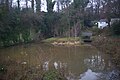 Worsley Delph, the entrance to the Duke of Bridgewater's underground mines (from Lancashire Coalfield)
 -
 Ribble estuarine alluvium (from Geology of Lancashire)


Did you know ...

- ... that Argleton (supposed location pictured) appears on Google Maps as a settlement in West Lancashire, England, even though no such place exists?

- ... that former Burnley chairman Bob Lord described coach Billy Dougall, who worked for the football club for 23 years, as the finest servant a club could have?
Subcategories

Cities map


WikiProjects


Associated Wikimedia
The following Wikimedia Foundation sister projects provide more on this subject:
-
 Commons
Free media repository -
 Wikidata
Free knowledge base -
 Wikiquote
Collection of quotations -
 Wikisource
Free-content library -
 Wikiversity
Free learning tools -
 Wikivoyage
Free travel guide -
 Wiktionary
Dictionary and thesaurus


