


Portal:Honduras

The Honduras Portal

Republic of Honduras República de Honduras (Spanish) | |
|---|---|
Motto:
| |
| ISO 3166 code | HN |

Honduras, officially the Republic of Honduras, is a country in Central America. It is bordered to the west by Guatemala, to the southwest by El Salvador, to the southeast by Nicaragua, to the south by the Pacific Ocean at the Gulf of Fonseca, and to the north by the Gulf of Honduras, a large inlet of the Caribbean Sea. Its capital and largest city is Tegucigalpa.
Honduras was home to several important Mesoamerican cultures, most notably the Maya, before Spanish colonization in the sixteenth century. The Spanish introduced Catholicism and the now-predominant Spanish language, along with numerous customs that have blended with the indigenous culture. Honduras became independent in 1821 and has since been a republic, although it has consistently endured much social strife and political instability, and remains one of the poorest countries in the Western Hemisphere. In 1960, the northern part of what was the Mosquito Coast was transferred from Nicaragua to Honduras by the International Court of Justice.
The nation's economy is primarily agricultural, making it especially vulnerable to natural disasters such as Hurricane Mitch in 1998. Honduras has a Human Development Index of 0.624, ranking 138th in the world. In 2022, according to the National Institute of Statistics of Honduras (INE), 73% of the country's population lived in poverty and 53% lived in extreme poverty. The lower class is primarily agriculturally based while wealth is concentrated in the country's urban centers. The country is one of the most economically unequal in Latin America. Honduran society is predominantly Mestizo; however, there are also significant Indigenous, Black, and White communities in Honduras. (Full article...)
Selected article -

Taguzgalpa was a region on the Caribbean coast of Central America lying between the Roman (Aguán) River and the San Juan River. Of Nahuatl origin, the term was first translated by the Spanish cleric Cristóbal de Pedraza in his 1544 Relación de la Provincia de Honduras e Higueras, based on information gathered during his tenure in Honduras (1538–1540). Pedraza reported that after a three-day ascent into the mountains behind Trujillo—likely the modern Sierra de la Esperanza—local informants explained Tagusgualpa to mean “the house where gold is melted,” referring to a principal settlement in the region where inhabitants from surrounding areas gathered to smelt gold. It appeared on the Dutch map of Montanus in 1671 with an alternate spelling of "Tiguzigalpa." It was frequently confused in nineteenth-century travel literature with Tegucigalpa, the present capital of Honduras, and it is possible that both words share the same root. However, a study of the location information of the two places in the original sixteenth- and seventeenth- century sources shows that they are not in the same place, and are both mentioned, in different areas in the same texts. In his classic study of indigenous names in Honduras, Alberto Membreño wrote, "For a long time it was believed that Tegucigalpa was a corruption of Taguzgalpa and that it meant 'mountain of silver.' Tegucigalpa did not form a part of Taguzgalpa, and when this province was conquered, Tegucigalpa already existed. Don Pedro de Alvarado wrote Teguycegalpa in the repartimiento of 1536." Membreño gives the etymology of Taguzgalpa as "tlalli, 'earth', cuztic, 'yellow', calli, 'house', and pan, 'in'. This province is so called because there is a great deal of gold on its surface and in the sands of its rivers; and it refers to the tradition that the Mexicans went to Taguzgalpa to take that metal to Moctezuma." (Full article...)
Interesting facts -
- ... that the Venezuelan footballer Edder Farías scored against Honduras in February 2015, his country's first victory since September 2013?
- ... that Tegucigalpa's dining includes traditional Honduran cuisine—a fusion of the African, Spanish and indigenous cuisines?
- ... that the Honduran romance novel Blanca Olmedo is a rare early female criticism of the establishment and corruption in Honduras?
- ... that when the 1980 Honduras earthquake struck, it gave a man a fatal heart attack?
Related portals


.svg)


General images -
-
 Actress America Ferrera. (from Culture of Honduras)
 -
 Oldest train still preserved in Honduras. (from History of Honduras)
 -
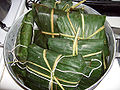 The nacatamal a prehispanic dish widely consumed in Honduras. (from Culture of Honduras)
 -
 Map of the town of Trujillo from the 16th century. (from History of Honduras)
 -
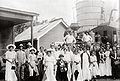 Train station in La Ceiba during the 1920s. The locomotives were one of the main means of transportation in Honduras during the 20th century. (from History of Honduras)
 -
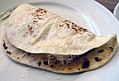 An homemade baleada with eggs, butter, cheese and beans (from Honduran cuisine)
 -
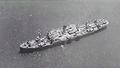 The SS Contessa, a Honduran ship that participated in the Operation Torch in the north African campaign in the Second World War. (from History of Honduras)
 -
 Old presidential palace of Honduras. (from History of Honduras)
 -
 Port of Amapala. (from History of Honduras)
 -
 Honduran National Congress, built during the 1950s (from History of Honduras)
 -
 After the fall of Tenochtitlan, Hernán Cortés made his journey to the region of las Hibueras, modern day Honduras. (from History of Honduras)
 -
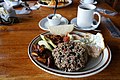 Casamiento, a rice and beans dish (from Honduran cuisine)
 -
 Diablos Negros, is a Honduran hard Rock band active since the 1980s. (from Culture of Honduras)
 -
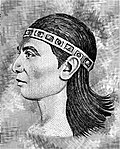 Lempira, Lenca leader and war lord. (from Culture of Honduras)
 -

-
 Footballer Porfirio Betancourt, 1981, one of the first hispanic players for the NASL. (from Culture of Honduras)
 -
The baleada is a popular Honduran fast food dish. (from Culture of Honduras)
-
 Wilson Palacios (from Culture of Honduras)
 -
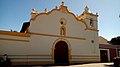 The church of la Merced in the city of Comayagua was the first Cathedral of Honduras in 1550 and is the oldest Honduran church still standing. (from History of Honduras)
 -
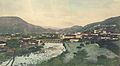 Tegucigalpa in 1910. (from History of Honduras)
 -
 Roger Espinoza (from Culture of Honduras)
 -
 Honduran Police in a rural area (from Crime in Honduras)
 -
 Juan Carlos Fanconi, Film Director (from Culture of Honduras)
 -
 The flag of the British protectorate of Mosquitia. (from History of Honduras)
 -
 Fried fish from Lake Yojoa (from Honduran cuisine)
 -
 The Virgin of Suyapa (from Culture of Honduras)
 -
 David Suazo. (from Culture of Honduras)
 -

-
 Lenca vessel from the Classic period depicting an ear of corn in its sheath (from Honduran cuisine)
 -
 General Luis Bogran. (from History of Honduras)
 -
 Traditional dance of Honduras. (from Culture of Honduras)
 -
 Tegucigalpa after the Mitch Hurricane. (from History of Honduras)
 -
 Graifuna traditional dance. (from Culture of Honduras)
 -
 After the 2009 coup d'état, the military presence in the streets began to be more common. (from History of Honduras)
 -
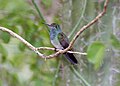 Honduran emerald (Amazilia luciae) (from Flora and fauna of Honduras)
 -
 Honduran army in 1926. (from History of Honduras)
 -

-
 Police in San Francisco, Lempira (from Crime in Honduras)
 -
 First coat of arms of Honduras given by the emperor Charles I of Spain an 5th of the Holy Roman empire. By the time of the colonial era Honduras suffered a demographic change due the arrival of Spanish immigrants (from History of Honduras)
 -
 Sir Salvador Moncada. Honduran pharmacologyst. (from Culture of Honduras)
 -
 Holy Week in Honduras. (from Culture of Honduras)
 -
 Central American president General Francisco Morazán Quezada.
 -
 Coat of Arms of Trujillo, one of the oldest towns founded by the Spanish in Honduras.
 -
 Pre Columbian pottery from the Ulua region. (from Culture of Honduras)
 -
 Tela's railroad company building, built in 1919. (from History of Honduras)
 -
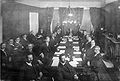 The Central American peace conference in 1907. (from History of Honduras)
 -
 Group of dancers with typical costumes from Honduras. (from Culture of Honduras)
 -
 Emilio Izaguirre (from Culture of Honduras)
 -
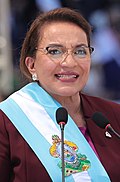 Xiomara Castro became the first woman to gain a presidential charge in Honduras. (from History of Honduras)
 -
 Pyramid 102 of Yarumela, one of the oldest Honduran archeological sites. (from History of Honduras)
 -
 President Manuel Bonilla. (from History of Honduras)
 -
 La Merced plaza of Comayagua after the independence from Spain. (from History of Honduras)
 -
 Mayan stellae. (from Culture of Honduras)
 -
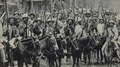 Honduran armed conflict of 1907. (from History of Honduras)
 -
 Cathedral of Saint Michael Archangel in Tegucigalpa was built during the XVIII century. (from History of Honduras)
 -
 City of Comayagüela in the 2010s (from History of Honduras)
 -
 Lencan cloth. (from Culture of Honduras)
 -
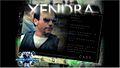 El Xendra is an independent film that mixes elements of suspense and science fiction. (from Culture of Honduras)
 -
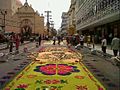 Sawdust carpet in Holy Week. (from Culture of Honduras)
 -
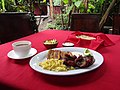 Typical Honduran breakfast. (from Culture of Honduras)
 -
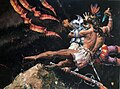 Painting depicting the chief Lempira fighting against a conquistador (from History of Honduras)
 -
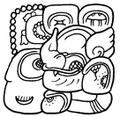 Mayan representative hieroglyphic of the Yax Kuk Mo Dynasty that later would become the emblem of the Kingdom of "Oxwitik" also known as Copán. (from History of Honduras)
 -
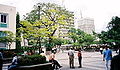 Central Park in San Pedro Sula, where several cultural events take place throughout the year. (from Culture of Honduras)
 -
 European pirates, especially British, French, and Dutch attacked Honduran towns during the colonial era.
 -
 American troops arriving in Honduras in 1988 during Operation Golden Pheasant (from History of Honduras)
 -
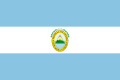 Flag of the Central American Federation that lasted until 1839. (from History of Honduras)
 -
 In 1986, Honduras bombed two Nicaraguan towns. (from History of Honduras)
 -
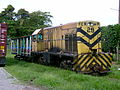 The railroad transportation suffered a lot of economic issues and disadvantages during the 2000s, it was not until 2010 passenger trains where reactivated. (from History of Honduras)
 -
 Red-eyed tree frog (Agalychnis callidryas) in a forest in eastern Honduras (from Flora and fauna of Honduras)
 -
 The Fortress of San Fernando de Omoa (from History of Honduras)
 -
 Cafe Guancasco, is one of the best exponents of Honduran pop rock. (from Culture of Honduras)
 -
 Pork chop with plantain chips (from Honduran cuisine)
 -
 San Cristóbal fortress, in the city of Gracias, built during the 19th century. (from History of Honduras)
 -
 Sopa de caracol (conch soup) (from Honduran cuisine)
 -
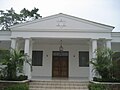 Maguen David sinagoge in San Pedro Sula, one of the places of the Honduran Jewish community. (from Culture of Honduras)
 -
A Honduran breakfast (from Honduran cuisine)
-
 The dictatorship of Carias Andino is remembered as the longest dictatorship that Honduras has ever had (from History of Honduras)
 -
 Mayan rain god Chaac representation at the Mayan Sculpture Museum in Copán. (from Culture of Honduras)
_(cropped).jpg)


_(2495402213).jpg)


.svg)

.jpg)


.jpg)


.jpg)


List articles

- Departments of Honduras
- List of cathedrals in Honduras
- List of companies of Honduras
- List of ecoregions in Honduras
- List of football clubs in Honduras
- List of Honduran departments by Human Development Index
- List of Hondurans
- List of Honduras-related topics
- List of national parks of Honduras
- List of political parties in Honduras
- List of presidents of Honduras
- List of rivers of Honduras
- List of wars involving Honduras
- Municipalities of Honduras
- Outline of Honduras
- Timeline of Tegucigalpa
Largest cities or towns

Categories

Politics articles
Map

Get involved
See WikiProject Honduras for editor resources and to collaborate with other editors on improving Wikipedia's Honduras-related articles.
Need help?
Do you have a question about Honduras that you can't find the answer to? Consider asking it at the Wikipedia reference desk.
Tasks
 |
Here are some tasks awaiting attention:
|
Did you know...
- ... that both El Salvador and Honduras claim to be the country of origin of the pupusa?
Associated Wikimedia
The following Wikimedia Foundation sister projects provide more on this subject:
-
 Commons
Free media repository -
 Wikidata
Free knowledge base -
 Wikiquote
Collection of quotations -
 Wikisource
Free-content library -
 Wikiversity
Free learning tools -
 Wikivoyage
Free travel guide -
 Wiktionary
Dictionary and thesaurus


Sources
External media


