


Wikipedia:Reference desk/Language

of the Wikipedia reference desk.
Main page: Help searching Wikipedia
How can I get my question answered?
- Select the section of the desk that best fits the general topic of your question (see the navigation column to the right).
- Post your question to only one section, providing a short header that gives the topic of your question.
- Type '~~~~' (that is, four tilde characters) at the end – this signs and dates your contribution so we know who wrote what and when.
- Don't post personal contact information – it will be removed. Any answers will be provided here.
- Please be as specific as possible, and include all relevant context – the usefulness of answers may depend on the context.
- Note:
- We don't answer (and may remove) questions that require medical diagnosis or legal advice.
- We don't answer requests for opinions, predictions or debate.
- We don't do your homework for you, though we'll help you past the stuck point.
- We don't conduct original research or provide a free source of ideas, but we'll help you find information you need.
How do I answer a question?
Main page: Wikipedia:Reference desk/Guidelines
- The best answers address the question directly, and back up facts with wikilinks and links to sources. Do not edit others' comments and do not give any medical or legal advice.

June 9
[edit]ん
[edit]Why can't a Japanese word begin with ん? ~2026-34079-06 (talk) 12:06, 9 June 2026 (UTC)
- Who says it can't? ←Baseball Bugs What's up, Doc? carrots→ 12:23, 9 June 2026 (UTC)
- An -n- sound at the start of a word is supposed to be followed by a vowel. That's in particular true in Japanese which regularly has to throw in vowels when adapting Western words (e.g. Makudonarudosu for McDonalds). Therefore rather than an ん, the word will start a character that integrates the vowel, i.e. な (na), に (ni, including the combinations にゃ - nya -, にゅ - nyu-, にょ - nyo-), ぬ (nu), ね (ne), の (no). -- Jungleman33 (talk) 12:34, 9 June 2026 (UTC)
- (Edit conflict.) This might be an LTA, but all languages have their own phonotactics, and Japanese words beginning with n have their own five kana syllables. 惑乱 Wakuran (talk) 12:34, 9 June 2026 (UTC)
- What is an LTA? ~2026-34079-06 (talk) 13:32, 9 June 2026 (UTC)
- Lawn Tennis Association. ←Baseball Bugs What's up, Doc? carrots→ 17:08, 9 June 2026 (UTC)
- Long-Term Assignment. -- Jungleman33 (talk) 18:25, 9 June 2026 (UTC)
- See WP:LTA, here possibly specifically WP:LTA/CB885. ‑‑Lambiam 18:32, 9 June 2026 (UTC)
- If it's not, I may apologize, but there has been many similar posts with similar signatures recently... 惑乱 Wakuran (talk) 21:07, 9 June 2026 (UTC)
- All "temporary accounts" (anonymized IP signatures) are similar, looking like ~2026-12345-67. Those that have a user page are almost all blocked socks. ‑‑Lambiam 05:06, 10 June 2026 (UTC)
- All "temporary accounts" (anonymized IP signatures) are similar, looking like
- If it's not, I may apologize, but there has been many similar posts with similar signatures recently... 惑乱 Wakuran (talk) 21:07, 9 June 2026 (UTC)
- What is an LTA? ~2026-34079-06 (talk) 13:32, 9 June 2026 (UTC)
- (ec) Regardless of who says it, they don't. ‑‑Lambiam 12:38, 9 June 2026 (UTC)
- (Edit conflict.) This might be an LTA, but all languages have their own phonotactics, and Japanese words beginning with n have their own five kana syllables. 惑乱 Wakuran (talk) 12:34, 9 June 2026 (UTC)
- Apparently, there are a few African (and such) loanwords starting with ん / ン, such as ja:ンデベレ語. It doesn't seem as if they are allowed in shiritori, though. 惑乱 Wakuran (talk) 11:34, 10 June 2026 (UTC)
- Although it could be a pretty decent J-rap line, like "I use my words, build up worlds like Lego - Hacked shiritori with Ndeberego". My Japanese is not good enough for me to phrase it passably, though. 惑乱 Wakuran (talk) 11:51, 10 June 2026 (UTC)
June 11
[edit]Arm accessory
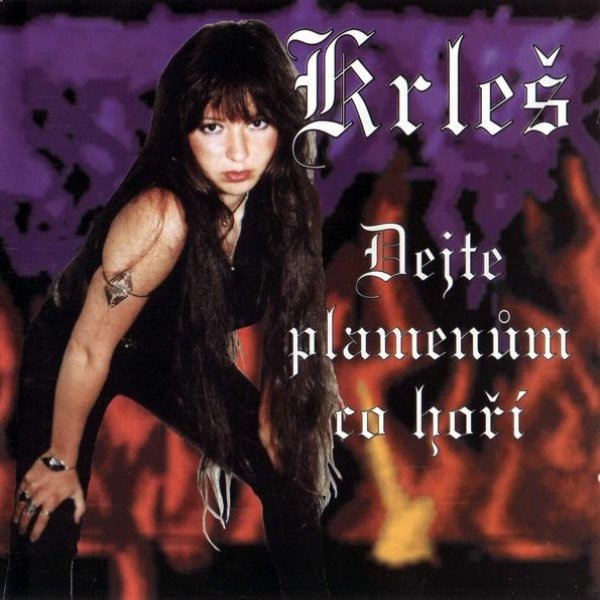
[edit]Good evening. What is the item on her arm (https://img.pop-music.cz/lyrics/albums/2018/krles-dejte-plamenum-co-hori.jpg) called? ~2026-33908-31 (talk) 19:25, 11 June 2026 (UTC)
- It's an arm ring, or if you wonder about the shape of the ornament, it's a lozenge (shape) or diamond (shape). I don't know if these two things have a name when combined. Card Zero (talk) ※ 21:52, 11 June 2026 (UTC)
- Just to be clear, you're talking about the upper arm, correct? ~2026-33908-31 (talk) 19:57, 12 June 2026 (UTC)
- Yes, an arm ring or armlet, or armband, is worn on the upper arm, not at the wrist. If worn on the lower arm, it might be considered to be a Bracelet, or might not, as you please. It might also be considered to be a bangle. Bracelets usually more flexible, bangles are rigid but often loose, armlets are always rigid and tight. Card Zero (talk) ※ 21:30, 12 June 2026 (UTC)
- Just to be clear, you're talking about the upper arm, correct? ~2026-33908-31 (talk) 19:57, 12 June 2026 (UTC)
June 12
[edit]24-hour clock in English
[edit]When English speakers use 24-hour clock (in situations where it is used by English speakers), do they ever use hour numbers from (0 to 23) without minutes being mentioned? This could refer to approximate time around the whole hour (:00). So, do English speakers ever use constructions like "from 7 to 21", "until 13", "before 14", "after 20", "at 18", "between 9 and 19"? And are ranges of times in English ever written as like "7–21", with the numbers meaning the same as in "7:00–21:00"? I have never (or almost never) seen these constructions in texts written by native English speakers. --40bus (talk) 21:43, 12 June 2026 (UTC)
- Didn't you ask this same question a while back? Anyway my experience is that it's rare, but it's certainly attested. "It was a bright cold day in April, and the clocks were striking thirteen." --Trovatore (talk) 21:49, 12 June 2026 (UTC)
- That passage uses it only because it's not normal usage, as a way of establishing the milieu outside our experience. --~2026-34761-33 (talk) 00:02, 13 June 2026 (UTC)
- Does it? I was never really sure; could have been something they said in Britain for all I knew. --Trovatore (talk) 05:42, 13 June 2026 (UTC)
- Perhaps re-read the book now you know. That first line is really important! See also Thirteenth stroke of the clock. DuncanHill (talk) 06:17, 13 June 2026 (UTC)
- You're not the only one so to think. In the standard Italian translation of Nineteen Eighty-Four the first line goes "Era una bella e fredda mattina d'Aprile e gli orologi batterono l'una." Presumably the translator took it that clocks striking thirteen was normal practice in Britain and adapted the sentence for the benefit of readers living in a country where it wasn't, entirely losing Orwell's unsettling effect in the process. --Antiquary (talk) 09:52, 13 June 2026 (UTC)
- Translators do have a tendency to mess some of this stuff up. I remember reading Hitchhiker's Guide in Italian, and when it got to the line about how the Vogon ships hung in the air in much the way a brick doesn't, the translation mumbled something about how the ship looked like a brick except a brick doesn't hang in the air, totally ruining the effect. To be fair I couldn't come up with a decent translation either. La nave pendeva nell'aria nel modo in cui un mattone non fa — doesn't really work; not sure why.
- Back on Orwell, for some reason I've been seeing blurbs in Spanish about Animal Farm in some feeds, and it says something like todos los animales son iguales, pero algunos son mas importantes de los altros (sorry if I've messed that up somehow; I don't really speak Spanish) which again completely destroys the point. For this one I really don't know why they couldn't have used mas iguales. --Trovatore (talk) 17:49, 13 June 2026 (UTC)
- Side question to Antiquary — why batterono? It's an opening description, setting the stage, so I would expect battevano, or maybe even stavano battendo if the translator wanted to be super-faithful to the English past continuous. --Trovatore (talk) 17:57, 13 June 2026 (UTC)
- @Antiquary: Anthony Burgess mentioned that in an interview "My bookshelves are disorganized. Wishing to reread Nineteen Eighty-Four, I could find at first only the Italian edition. This, for the moment, would have to do. But there was something wrong with that first sentence. ‘Era una bella e fredda mattina d’aprile e gli orologi batterono l’una.’ It was a bright cold day in April and the clocks struck one. It ought to be ‘battevano tredici colpi’: they were striking thirteen. Latin logic, you see. The translator couldn’t believe that clocks would strike thirteen, even in 1984, since no reasonable ear could ever take in more than twelve. So Italian readers were forced to miss a signal of the comic.". I think somewhere else he ascribed it to the translator's belief in "sensible Italian clocks". DuncanHill (talk) 00:25, 14 June 2026 (UTC)
- Burgess: thought so, but I couldn't find it on my shelves. --Antiquary (talk) 08:24, 14 June 2026 (UTC)
- Oh, that must be the reason for batterono instead of battevano. The imperfect is a descriptive tense, setting the stage for what's in the background while the action happens in the passato remoto. But it's hard to transport the reader into the sound of a single clock bell sounding and expect anything else to happen, so the translator changed it to a unique, completed event instead of a description. --Trovatore (talk) 00:38, 14 June 2026 (UTC)
- @Antiquary: Anthony Burgess mentioned that in an interview "My bookshelves are disorganized. Wishing to reread Nineteen Eighty-Four, I could find at first only the Italian edition. This, for the moment, would have to do. But there was something wrong with that first sentence. ‘Era una bella e fredda mattina d’aprile e gli orologi batterono l’una.’ It was a bright cold day in April and the clocks struck one. It ought to be ‘battevano tredici colpi’: they were striking thirteen. Latin logic, you see. The translator couldn’t believe that clocks would strike thirteen, even in 1984, since no reasonable ear could ever take in more than twelve. So Italian readers were forced to miss a signal of the comic.". I think somewhere else he ascribed it to the translator's belief in "sensible Italian clocks". DuncanHill (talk) 00:25, 14 June 2026 (UTC)
- Does it? I was never really sure; could have been something they said in Britain for all I knew. --Trovatore (talk) 05:42, 13 June 2026 (UTC)
- [Edit Conflict] But that was a deliberately anomalous usage in a novel published in 1948 notionally depicting British life in the year 1984 – it was intended to be contrary to the norm, and to immediately (in the novel's opening sentence) indicate that the situation was different from current reality.
- I myself cannot recall ever encountering unqualified, definite 24-hour hour numbers being used in a British English situation; if referring to the approximate hour, "hundred" or "hundred hours" are appended. If a speaker was being deliberately laconic, they might answer a question "Is it Fourteen hundred hours?" with "No, Fifteen", but that would be idiosyncratic.
- However, if the hours mentioned are all before 13:00, they can be ambiguously heard, and replied to, in 12-hour terms: "Is the meeting from Nine to Eleven? "No, from Ten to Twelve", but never "From Eleven to Thirteen." {The poster formerly known as 87.81.230.195} ~2026-27434-43 (talk) 00:07, 13 June 2026 (UTC)
- Are constructions like ”from 7 to 21” ever written as such (and not like ”from 7:00 to 21:00”? And is :00 (in both 24- and 12-hour clocks) ever said as ”oh oh”? --40bus (talk) 07:14, 13 June 2026 (UTC)
- No to both (or at least not in any English-speaking community known to me). {The poster formerly known as 87.81.230.195} ~2026-27434-43 (talk) 14:00, 13 June 2026 (UTC)
- I've seen that (albeit on a 12-hour clock; I don't know if that's what you wanted) a few times, usually spelled out. A quick search on Project Gutenberg finds, e.g., "one to six in the afternoon" (https://gutenberg.org/cache/epub/14798/pg14798-images.html), "from eleven in the Morning to three in the Afternoon" (https://www.gutenberg.org/files/62720/62720-h/62720-h.htm), and "What other people in the world, for example, would insist on your coming at eight and remaining until nearly four in the morning" (https://www.gutenberg.org/files/37322/37322-h/37322-h.htm). Ceratarges-etc (talk) 13:50, 19 June 2026 (UTC)
- Are constructions like ”from 7 to 21” ever written as such (and not like ”from 7:00 to 21:00”? And is :00 (in both 24- and 12-hour clocks) ever said as ”oh oh”? --40bus (talk) 07:14, 13 June 2026 (UTC)
- That passage uses it only because it's not normal usage, as a way of establishing the milieu outside our experience. --~2026-34761-33 (talk) 00:02, 13 June 2026 (UTC)
- Adopting military useage is common enough e.g. "anytime after seventeen hundred hours". Doug butler (talk) 22:35, 12 June 2026 (UTC)
- Even in the UK, most applications outside transport timetables, electronic clocks and computing use the 12-hour clock. Saying 'I work 9 to 17' is completely unheard of in writing, let alone orally. JuniperChill (talk) 10:14, 13 June 2026 (UTC)
- I use 24 hour times in works for my personal use. I do not encounter enough people who would understand it to use it in public facing materials here in the US. I have actually had people tell me that they hate "military time" because they never know if it's AM or PM. Which is infuriating because the 24 hour clock was designed to do away with the need for AM and PM. --User:Khajidha (talk) (contributions) 15:37, 13 June 2026 (UTC)
- Yeah, I find the 24 hour clock more logical and easier to understand, over all, but I have kinda grown up with it since the 1980's. 惑乱 Wakuran (talk) 18:02, 13 June 2026 (UTC)
June 13
[edit]Should English learners memorise phonemic or phonetic transcriptions of English words?
[edit]Studying transcriptions of pronunciation is important since people hear differently depending on which languages they know well. For example, Japanese people often struggle with hearing the difference between /r/ and /l/ while speakers of many other languages don't have a problem with it.
However, I wonder whether students should memorise phonemic // or phonetic [] transcription (or both) of English words. For example, let's assume they have good memory, want to master modern Received Pronunciation and finding (or creating) phonetic transcriptions is not a problem. Should they memorise that 'cat' is pronounced /kæt/ or [kʰat] or both transcriptions? How about 'pressure'? Memorising /ˈpreʃə(r)/ or [ˈpʰɹʷɛʃ.ə(ɹ)] or both?
Of course, phonetic transcription could include more details but narrower transcriptions aren't usually available anywhere or easy to create, so let's not think about other (possible or not) transcriptions of those words.
Perhaps, that's a bit silly question, but I really don't know. Note that my question is not about whether students should memorise transcriptions. Please don't discuss that. Thank you ~2026-34822-32 (talk) 10:40, 13 June 2026 (UTC)
- To me, phonetic transcription mostly just seems unnecessary complicated for the average learner, as it rarely impedes communication. Even when learning the difference, it might be difficult to perceive and produce it in practice. 惑乱 Wakuran (talk) 11:30, 13 June 2026 (UTC)
- Why would you want to teach new students of English to drop the trailing "r" sound on words? ←Baseball Bugs What's up, Doc? carrots→ 11:50, 13 June 2026 (UTC)
- In British English /r/ is only pronounced before a vowel, so it makes sense to transcribe it as /(r)/ ~2026-34720-74 (talk) 12:03, 13 June 2026 (UTC)
- What percentage of the English-speaking world drops the trailing "r"? ←Baseball Bugs What's up, Doc? carrots→ 20:17, 13 June 2026 (UTC)
- I don't know, and to be honest I'm not every sure whether I understand what you mean by 'trailing' correctly, but perhaps you may find this map intresting: https://www.reddit.com/media?url=https%3A%2F%2Fi.redd.it%2Fzb4kwmayv3mz.png
- Also, note that I mentioned 'modern Received Pronunciation' in my question, so I doubt 'the English-speaking world' is important for my question ~2026-34848-73 (talk) 20:47, 13 June 2026 (UTC)
- What percentage of the English-speaking world drops the trailing "r"? ←Baseball Bugs What's up, Doc? carrots→ 20:17, 13 June 2026 (UTC)
- In British English /r/ is only pronounced before a vowel, so it makes sense to transcribe it as /(r)/ ~2026-34720-74 (talk) 12:03, 13 June 2026 (UTC)
- Neither phonemic nor phonetic transcriptions are particularly useful for someone who is not already familiar with the phonemes of the transcribed language. Having to memorize these may make learning the language considerably more painful for the sake of a dubious gain. ‑‑Lambiam 20:28, 13 June 2026 (UTC)
- What if someone is already familiar with the phonemes and wants to learn phonemic or phonetic transcriptions or both of them or something similar. What should they learn? ~2026-34848-73 (talk) 20:49, 13 June 2026 (UTC)
- Phonetic transcription is dialect, region and sometimes even speaker dependent. So learning it might be helpful if you settle permanently in Meeks, Georgia, but not so much if you travel around. For most people, learning how a term is pronounced by hearing it being spoken in natural speech is probably a lot easier. ‑‑Lambiam 07:56, 14 June 2026 (UTC)
- I don't think it's true. As I explained above people hear differently. Memorising some kind of transcriptions is a must ~2026-35068-45 (talk) 10:13, 14 June 2026 (UTC)
- People would still need to learn the transcription system, though. 惑乱 Wakuran (talk) 10:49, 15 June 2026 (UTC)
- I don't think it's true. As I explained above people hear differently. Memorising some kind of transcriptions is a must ~2026-35068-45 (talk) 10:13, 14 June 2026 (UTC)
- Phonetic transcription is dialect, region and sometimes even speaker dependent. So learning it might be helpful if you settle permanently in Meeks, Georgia, but not so much if you travel around. For most people, learning how a term is pronounced by hearing it being spoken in natural speech is probably a lot easier. ‑‑Lambiam 07:56, 14 June 2026 (UTC)
- What if someone is already familiar with the phonemes and wants to learn phonemic or phonetic transcriptions or both of them or something similar. What should they learn? ~2026-34848-73 (talk) 20:49, 13 June 2026 (UTC)
Speed Demon
[edit]According to Ngrams, "Speed Demon" came into usage in the early part of the 20th century, reaching an initial peak around 1925 (see here). Do we know what it initially referred to? I assume it had to do with automobile drivers, but Wiktionary doesn't have much to go on. (It then curiously became much less popular around 1980 before getting back up to its previous popularity again.) Matt Deres (talk) 19:57, 13 June 2026 (UTC)
- In Newspapers.com (pay site), I'm seeing references to "demon-like" speed as far back as the early 1800s, in reference to speeding trains. Auto racers such as Barney Oldfield were being called "speed demons" by the early 1900s. ←Baseball Bugs What's up, Doc? carrots→ 20:23, 13 June 2026 (UTC)
- Oldfield: the first person in history to (intentionally) go a mile a minute. (Unfortunate mountaineers could have gone faster.) Clarityfiend (talk) 01:08, 14 June 2026 (UTC)
- Hardly. Steam locomotives on trains were reaching 80 mph by the 1840s and 90-100 by the 1890s. See List of speed records in rail transport#Steam. --~2026-34783-60 (talk) 04:43, 14 June 2026 (UTC)
- And given the quality of the tracks in those days, such speeds were demonic indeed. Many 19th century "records" are unverifiable and dubious, but a mile a minute wasn't extraordinary for express trains in the 1890s. Electric trains, being faster than steam, managed the first verifiable 100 mph in 1901 (which was quite demonic) and, after track improvements, the same train managed well over 200 km/h (not demonic at all) in 1903, four months after Oldfield's mile a minute in a car and two months before the Wright brothers first took their Flyer into the air. PiusImpavidus (talk) 10:11, 14 June 2026 (UTC)
- By "quality of the tracks in those days", you probably have American railways in mind, not British. --~2026-35026-85 (talk) 19:14, 14 June 2026 (UTC)
- For comparison, the Great Western Railway's steam locomotive City of Truro was timed as reaching 100mph (160.9 kph) in 1904. This was on an ordinary main line hauling a scheduled public train, not on an experimental track. {The poster formerly known as 87.81.230.195} ~2026-27434-43 (talk) 22:21, 14 June 2026 (UTC)
- British (but also German) tracks were (and still are) certainly better than American tracks – the higher population density might help. And of course, there were some good tracks in America too. But the 80 mph claims in the 1840s and 90–100 mph claims in the 1890s (the time periods mentioned a few posts up) were on worse tracks than what the City of Truro had under its wheels in 1904.
- And indeed it was a regularly scheduled mail train on an ordinary main line, nothing experimental, but it was a deliberate record attempt at the fastest Plymouth-to-London run, to prove that the GWR was faster than the LSWR. The speed was recorded by a reliable man with a watch, who noted the passage times at mileposts. Some people have claimed irregularities in the timings, suggesting this man may have occasionally misread his watch by a few seconds. Without an automatic speed recorder, you can't really measure such speeds over a single mile to better than 3 mph accuracy and the measurement with the largest positive error could have been declared the record speed.
- After the North German Lloyd and Hamburg–America lines made Plymouth their port of call in the UK on the transatlantic route in 1903, the two railway companies entered in a competition to be the fastest on the Plymouth–London route. Tracks were brought in perfect condition, schedules were optimised for the fast run (except that the LSWR had to use a short stretch of GWR tracks through Exeter St Davids, where the two racing trains would pass each other in opposite directions). In those days, people raced trains with paying passengers, ignoring official speed limits. Worse, sometimes the passengers bribed the crew to race. This ended after the 1906 Salisbury rail crash.
- (I just pulled "The Fastest Trains in the World" by G Freeman Allen from my shelf; that's my main source.) PiusImpavidus (talk) 11:01, 15 June 2026 (UTC)
- Electrification of the American train system is apparently also on an abysmal level. Might possibly be due to small government regulation and an extremely strong trust in the free market. 惑乱 Wakuran (talk) 12:09, 15 June 2026 (UTC)
- I'm pretty sure about that. PiusImpavidus (talk) 16:15, 16 June 2026 (UTC)
- Electrification of the American train system is apparently also on an abysmal level. Might possibly be due to small government regulation and an extremely strong trust in the free market. 惑乱 Wakuran (talk) 12:09, 15 June 2026 (UTC)
- For comparison, the Great Western Railway's steam locomotive City of Truro was timed as reaching 100mph (160.9 kph) in 1904. This was on an ordinary main line hauling a scheduled public train, not on an experimental track. {The poster formerly known as 87.81.230.195} ~2026-27434-43 (talk) 22:21, 14 June 2026 (UTC)
- By "quality of the tracks in those days", you probably have American railways in mind, not British. --~2026-35026-85 (talk) 19:14, 14 June 2026 (UTC)
- Okay, by car. Clarityfiend (talk) 11:05, 14 June 2026 (UTC)
- And given the quality of the tracks in those days, such speeds were demonic indeed. Many 19th century "records" are unverifiable and dubious, but a mile a minute wasn't extraordinary for express trains in the 1890s. Electric trains, being faster than steam, managed the first verifiable 100 mph in 1901 (which was quite demonic) and, after track improvements, the same train managed well over 200 km/h (not demonic at all) in 1903, four months after Oldfield's mile a minute in a car and two months before the Wright brothers first took their Flyer into the air. PiusImpavidus (talk) 10:11, 14 June 2026 (UTC)
- Hardly. Steam locomotives on trains were reaching 80 mph by the 1840s and 90-100 by the 1890s. See List of speed records in rail transport#Steam. --~2026-34783-60 (talk) 04:43, 14 June 2026 (UTC)
- Oldfield: the first person in history to (intentionally) go a mile a minute. (Unfortunate mountaineers could have gone faster.) Clarityfiend (talk) 01:08, 14 June 2026 (UTC)
- OED first citation is 1941 "Racing motorists usually referred to driving in a race as either ‘cracking’ or ‘dicing’, the latter word having been derived from the journalists' former habit of writing about their being ‘speed demons dicing with death’." Prince Chula Chakrabongse, Dick Seaman xiv. 357 DuncanHill (talk) 01:32, 14 June 2026 (UTC)
- Here's a Newspapers.com clip from 1905, casually referring to Oldfield as a "speed demon".[1] ←Baseball Bugs What's up, Doc? carrots→ 04:45, 14 June 2026 (UTC)
- In the 1890s ice-skating too fast could make you a speed demon. --Antiquary (talk) 08:33, 14 June 2026 (UTC)
- Here's a Newspapers.com clip from 1905, casually referring to Oldfield as a "speed demon".[1] ←Baseball Bugs What's up, Doc? carrots→ 04:45, 14 June 2026 (UTC)
- In cricket, the term "Speed demon" refers to a very fast bowler. This article demonstrates that usage in its title. Fred Spofforth was one of Australia's early Test cricket stars, being the first to take 50 Test wickets and the first to take a Test Hat trick. This was back in the 1870s and 1880s. He described himself as the demon and was known as "The Demon Bowler". HiLo48 (talk) 09:12, 14 June 2026 (UTC)
What type of language task is this?
[edit]
I'm looking for the linguistics article that best describes a general topic of the type shown. –LaundryPizza03 (dc̄) 22:28, 13 June 2026 (UTC)
- Possibly language identification? 惑乱 Wakuran (talk) 23:22, 13 June 2026 (UTC)
- I thought so, too, but that article seems to be about identifying the language of a text. –LaundryPizza03 (dc̄) 06:01, 14 June 2026 (UTC)
- I doubt this type of task is a topic considered in linguistics. Curiously, sone sentences are not idiomatic, such as Μιλώ τα ελληνικά instead of Μιλώ ελληνικά. ‑‑Lambiam 10:57, 15 June 2026 (UTC)
- Wherever you might find it, the reference I attached explains the poster itself. It pertains to language barriers to asylum seeking in the United States. –LaundryPizza03 (dc̄) 06:22, 17 June 2026 (UTC)
References
Two questions
[edit]- Are heterorganic prenasalized consonants like /ᵐk/, /ⁿp/ and /ᵑt/, where the nasal part and the stop part are of different place of articulation, possible?
- Does Portuguese have an allophonic velar nasal before velar consonants, like most other Romance languages? --40bus (talk) 23:18, 13 June 2026 (UTC)
June 14
[edit]Mama
[edit]Why do so many languages have a word similar to mama? ~2026-34724-11 (talk) 11:16, 14 June 2026 (UTC)
- Because it's one of the first "words" that babies make. ←Baseball Bugs What's up, Doc? carrots→ 11:17, 14 June 2026 (UTC)
- Exactly. Our article on Mama and papa says "Mama and papa use speech sounds that are among the easiest to produce: bilabial consonants like /m/, /p/, and /b/, and the open vowel /a/. They are, therefore, often among the first word-like sounds made by babbling babies (babble words), and parents tend to associate the first sound babies make with themselves and to employ them subsequently as part of their baby-talk lexicon." --Antiquary (talk) 11:20, 14 June 2026 (UTC)
- Although the article makes the argument that these are etymological coincidences, it's interesting that it also says, "some scientists believe that mama and papa were among the first words that humans spoke." If so, then it would mean that this commonality is so strong that it has tended to overwhelm language localization. ←Baseball Bugs What's up, Doc? carrots→ 15:53, 14 June 2026 (UTC)
- I've removed that statement from the article. It was sourced only to a popular science magazine, and through it to a conference paper in a not-very-pertinent conference. That presentation, if summarized correctly, may indeed have suggested that mama-papa words are inherited and cognate and as such potentially a legacy of Proto-World, but that's an extremely outlandish claim and diametrically opposed to solid scholarly consensus elsewhere, and seems to have very little in the way of empirical evidence in its support except for the trivial fact that mama-papa words are frequent. Fut.Perf. ☼ 16:09, 14 June 2026 (UTC)
- Aha! ←Baseball Bugs What's up, Doc? carrots→ 16:13, 14 June 2026 (UTC)
- Can you please explain in what way it is "diametrically opposed to solid scholarly consensus elsewhere"? Namely, what is this consensus that is diametrically opposed to it? And based on what evidence? (It's one thing to note a lack of evidence for a thing, it's another to say that a lack of evidence is evidence against that thing; the latter is simply not true.) ~2026-34838-40 (talk) 23:45, 14 June 2026 (UTC)
- Most words have a half-life of 2000 to 4000 years before being replaced by a new noncognate word in the trail from an ancestral to a descendant language, which means they "suffer from too much semantic and phonetic erosion to allow secure identification of true cognates beyond 5,000 to 9,000 y". However, a few "ultraconserved words" can survive for much longer, with "half-lives of once every 10,000, 20,000 or even more years".[2]
- I've removed that statement from the article. It was sourced only to a popular science magazine, and through it to a conference paper in a not-very-pertinent conference. That presentation, if summarized correctly, may indeed have suggested that mama-papa words are inherited and cognate and as such potentially a legacy of Proto-World, but that's an extremely outlandish claim and diametrically opposed to solid scholarly consensus elsewhere, and seems to have very little in the way of empirical evidence in its support except for the trivial fact that mama-papa words are frequent. Fut.Perf. ☼ 16:09, 14 June 2026 (UTC)
- Although the article makes the argument that these are etymological coincidences, it's interesting that it also says, "some scientists believe that mama and papa were among the first words that humans spoke." If so, then it would mean that this commonality is so strong that it has tended to overwhelm language localization. ←Baseball Bugs What's up, Doc? carrots→ 15:53, 14 June 2026 (UTC)
- Exactly. Our article on Mama and papa says "Mama and papa use speech sounds that are among the easiest to produce: bilabial consonants like /m/, /p/, and /b/, and the open vowel /a/. They are, therefore, often among the first word-like sounds made by babbling babies (babble words), and parents tend to associate the first sound babies make with themselves and to employ them subsequently as part of their baby-talk lexicon." --Antiquary (talk) 11:20, 14 June 2026 (UTC)
- The Urlanguage, if there ever was one, is thought to have originated at least some 100,000 years ago. Words inherited over such a stretch of time in such a multitude of languages would have to have such long half-lives. This is, on the face of it, not entirely impossible. ‑‑Lambiam 10:37, 15 June 2026 (UTC)
- (In addition to what's been said above): the consensus is that these words tend to appear afresh in multiple languages, independently of each other, and that they do so exactly because creating them is so easy. In many instances, we can actually see this historically, as languages have layers of older and newer words, with the newer ones looking more obviously like "mama-papa" words while in the older ones these phonetic shapes have become distorted over time. For example, Indo-European languages including English have very ancient words like "father" and "mother" (from proto-IE *ph₂tḗr and *méh₂tēr, which both may preserve a very old layer of *pa- and *ma- like elements), but they all have innovated new words like "mum" and "dad" to partially substitute them. These new words haven't arisen out of the old ones; they were created afresh; and they have arisen recently, as seen from the fact that English doesn't share them even with its closest relatives (which have even more typical mama and papa like words, e.g. in German). Similarly, Chinese has old words 父 and 母 (now pronounced fù and mǔ in Mandarin, but from Proto-Sino-Tibetan *paʔ, *məʔ). The modern colloquial words are bàba and mãma. In both cases (IE and Sino-Tibetan), we know that the newer words weren't inherited, because we can literally see them emerge newly during historically attested time. The older layers might theoretically be inherited from some yet older proto-languages, but we have no reason to believe that they must have done so. Fut.Perf. ☼ 17:53, 15 June 2026 (UTC)
- If I'm reading you correctly, the "ma" part tends to nearly universal, but the local languages tend to alter it uniquely. For example, mater in Latin, and it's only the ma part that would have been enunciated by a child. ←Baseball Bugs What's up, Doc? carrots→ 12:59, 16 June 2026 (UTC)
- There's an underlying assumption in the theorising above that a language would originally only have one word (each) for "mother" and "father". In virtually all languages I am aware of, there are both informal 'parent–child' speech words (to some extent modifiable in individual families), and formal and legal 'adult–adult' speech words for them (the latter perhaps deriving from the former, though early languages would also have had words for non-human offspring–parent relationships, which might or might not overlap). I suspect this has been so for a very long time. {The poster formerly known as 87.81.230.195} ~2026-27434-43 (talk) 16:29, 16 June 2026 (UTC)
- Here's an article by Roman Jakobson on the topic, which I've cited previously on this desk. Deor (talk) 16:57, 14 June 2026 (UTC)
June 15
[edit]Question about "The X" vs "X" in lead text, but not titles
[edit]This might be a mixture of "general English grammar" and "Wikipedia MOS" question, but this seems like the most reasonable place to ask...
Where's the manual for whether to use "The" at the start of the text of an article?
I am aware of Wikipedia:Naming conventions (definite or indefinite article at beginning of name), however this is about titles, not the lead text.
For example, on the article Ministry of Sound, my brain would go "the Ministry of Sound" by analogy with "the Department of Defense has just done [whatever]...". Could the definite article here just depend on whether it's being treated as a name, or as a type of thing? For example, it wouldn't really make sense to say "the John". I'm confused. I don't even know if this is Wikipedia-specific.
A diehard editor (talk | edits) 07:08, 15 June 2026 (UTC)
- Ministry of Sound is not a ministry, whereas the Department of Defense is a government department. So yes, it depends on whether the title is a name, and further if the article is part of the name or not. Note that in Department of Defense the article is not in bold face, whereas e.g. in The Fall it is. --Wrongfilter (talk) 07:57, 15 June 2026 (UTC)
- To The or not to The, that is not a question related to the lead. It applies to all uses in running text. Either we write,
- "The Oolipoola was a mythical monster. [...] Using this spell, Adamantina slew the Oolipoola."
- or we write,
- "Oolipoola was a mythical monster. [...] Using this spell, Adamantina slew Oolipoola."
- The best is to follow what seems to be the usage in relevant sources. For example, on an "About" section on the website of Ministry of Sound, they write:
- "Founded in 1991 by Justin Berkmann, Ministry of Sound was born from a life-changing trip to New York, [...]. That ethos remains at the core of Ministry of Sound today."[3]
- So they themselves go without The. In contrast, the website of the UK government has a web page with a heading
- "Latest from the Ministry of Defence".[4]
- We should follow suit. ‑‑Lambiam 09:46, 15 June 2026 (UTC)
- Ah, that's very reasonable, but honestly this is more of a general English grammar question rather than Ministry of Sound-specific writing at this point. A diehard editor (talk | edits) 10:05, 15 June 2026 (UTC)
- Ministry of Sound was just being used as an example; the same principles would apply to any other such entity (so it would always be "The Beatles", not "Beatles") whether a 'popular beat combo' (Milud) or anything else. {The poster formerly known as 87.81.230.195} ~2026-27434-43 (talk) 13:51, 15 June 2026 (UTC)
- Except in constructions like "That's not a Stones song, it's a Beatles song". It would sound very wrong to say "It's a The Beatles song".
- The TV stations tie themselves into knots when spruiking some episode of a series as NEW; if the name includes "The", such as "The Chase", they're caught. They can't say "The NEW Chase", as that sounds like an entirely different show. They can't say just "NEW Chase", ditto. So what we get is "NEW The Chase", which doesn't sound like any version of English I know. It's a problem of their own making, however. If they didn't re-run old episodes without any advice to the watcher that they are in fact re-runs, they wouldn't have to resort to these connivances. Back in my day (he says croakily) it was the accepted form that anything we saw on TV was brand-new unless we were clearly and prominently advised otherwise. Simple. You could depend on it. It wasn't broke, but they sure as hell fixed it. -- Jack of Oz [pleasantries] 18:45, 16 June 2026 (UTC)
- "Spruiking". Had to look that up. How is it pronounced? I want to guess /ˈsprwi.kɪŋ/ but I'm having trouble making my mouth do that. --Trovatore (talk) 18:52, 16 June 2026 (UTC)
- Just /sproo-king/, rhymes with blue thing. [5] I actually thought it was an American expression. -- Jack of Oz [pleasantries] 19:34, 16 June 2026 (UTC)
- Australian English, apparently. Possibly taken up from Afrikaans. 惑乱 Wakuran (talk) 21:33, 16 June 2026 (UTC)
- Just /sproo-king/, rhymes with blue thing. [5] I actually thought it was an American expression. -- Jack of Oz [pleasantries] 19:34, 16 June 2026 (UTC)
- "Spruiking". Had to look that up. How is it pronounced? I want to guess /ˈsprwi.kɪŋ/ but I'm having trouble making my mouth do that. --Trovatore (talk) 18:52, 16 June 2026 (UTC)
- Ministry of Sound was just being used as an example; the same principles would apply to any other such entity (so it would always be "The Beatles", not "Beatles") whether a 'popular beat combo' (Milud) or anything else. {The poster formerly known as 87.81.230.195} ~2026-27434-43 (talk) 13:51, 15 June 2026 (UTC)
- Ah, that's very reasonable, but honestly this is more of a general English grammar question rather than Ministry of Sound-specific writing at this point. A diehard editor (talk | edits) 10:05, 15 June 2026 (UTC)
- BTW, if you're able to resolve your discussion in less than ten thousand words, you win an official tHe BeAtLeS prize. Matt Deres (talk) 17:04, 15 June 2026 (UTC)
- or an over 40k word discussion regarding whether the third world should be capitalised in Star Trek Into Darkness JuniperChill (talk) 20:38, 16 June 2026 (UTC)
- Of course the Third World should be capitalized. ‑‑Lambiam 07:40, 19 June 2026 (UTC)
- or an over 40k word discussion regarding whether the third world should be capitalised in Star Trek Into Darkness JuniperChill (talk) 20:38, 16 June 2026 (UTC)
June 17
[edit]Am I hearing right? Is there a rule when to pronounce /ɪə/ as ɪjə and when as ɪː in British English?
[edit]When I hear British audios of the words 'here', 'near' or 'beard' in dictionaries, I hear something like ɪje:
But when I hears audios of the word 'zero', 'cereal' or 'series' I hear something like 'ɪː'
1. Am I hearing mostly right?
2. If not, what do those speakers say?
3. If so, is there a rule when to pronounce /ɪə/ as ɪje and when as ɪː? (Or when do those speakers from dictionaries say ɪje and ɪː?) ~2026-35637-22 (talk) 21:02, 17 June 2026 (UTC)
- I would initially assume it's due to the "de-rhotacizing" of British English. In the latter examples, the r sound is clearly pronounced. 惑乱 Wakuran (talk) 22:11, 17 June 2026 (UTC)
- British English has 30+ different dialects (with differing vocabularies and grammars), one of which is optimistically called 'Standard English', and several dozen accents (with only differing sounds used in the same words), including the artificial standard 'Received Pronunciation' once insisted on by the BBC and the Upper-Middle class (the Aristocracy didn't care; Royalty had their own weird accent).
- Technically, you can pursue pronunciations in Standard English, but you will rarely encounter anyone who actually speaks it most of the time.
- Moreover, most individuals commonly, and both consciously and unconsciously, use different Registers depending on circumstances, and these may differ in both dialectical and accentual details. Good luck! {The poster formerly known as 87.81.230.195} ~2026-27434-43 (talk) 01:41, 18 June 2026 (UTC)
- The difference between these two sets is that the ⟨r⟩ follows a vowel in the same syllable in the first set ("here", "near" or "beard") and precedes a vowel in the second set ("zero", "cereal", "series"). The [ə] is a remnant of the trailing ⟨r⟩. ‑‑Lambiam 07:38, 19 June 2026 (UTC)
Questions
[edit]- Is there any language that has a consonant voicing harmony?
- Is there any Romance language that has phonemic contrast between /ʃ/ and /x/?
- Why place names Meadowood and Arrowood, as well as Australia men's soccer team's nickname Socceroos, not spelled as Meadowwood, Arrowwood and Soccerroos respectively? Why these three words have single consonant instead of double, despite that they are formed from words that would result a double consonant when compounding?
- Why are words Africa and America not spelled with letter K?
- How is clock time 0:25 (i.e. 12.25 a.m.) spoken in English? Oh twenty-five?
- When the word 2000s is used to refer to the whole century (2000-2099), rather than just the decade (2000-2009), is it pronounced as twenty hundreds or two-thousands?
- Are there any words in Spanish inherited from Latin ⟨qua⟩ that are spelled as ⟨qua⟩, not ⟨cua⟩?
- Is there any Romance language where names of elements ending -ium in Latin end in -ium, rather than -io?
- Is Why eats he so much correct?
- Is That he does correct?
--40bus (talk) 21:39, 17 June 2026 (UTC)
- 2. Not natively, apparently, unless you count dialects.
- 4. Latin-derived, as has been pointed out several times.
- 10. "That, he does." can be correct in context. 惑乱 Wakuran (talk) 22:04, 17 June 2026 (UTC)
- 4. Careful writers don't spell those words like that, and proofreaders don't let those words pass. That can be said about spelling of any English word
- 5.
- Twenty-five (minutes) past twelve
- Twelve twenty-five
- If it's clear what hour you're talking about also: twenty-five past
- In American English also: twenty-five (minutes) after twelve
- 6. Two thousands
- 9. No
- 10. Yes but only in right context, and even so it would be unnatural e.g. 'That he does his homework was a surprise for everyone'. Note that I'm talking about 'That he does' not about 'that he does' ~2026-35531-17 (talk) 22:27, 17 June 2026 (UTC)
- 3. Because the namers felt like it (or were letter conservationists). In the same vein, why was e. e. Cummings an anti-capitalist? Clarityfiend (talk) 00:29, 18 June 2026 (UTC)
- 3. It seems that a journalist in Sydney first coined the word Socceroos back in 1972. This article describes the history of the name pretty well. Always a single r. I've never before seen anyone suggest it should contain a double r. HiLo48 (talk) 01:51, 18 June 2026 (UTC)
- 3. In place names, the doubled letters (where they had no impact on pronunciation) were dropped decades to centuries ago by those places' inhabitants as unnecessary. In modern coinages, they just look ugly.
- 4. 'Amerika' is sometimes used satirically (or prophetically) if the user wants to allude to the USA's supposed rising fascism ('k' being perceived as a Germanic spelling), or as an allusion to its racism (from the KKK).
- 5. Further to ~2026-35531-17 above, Oh-twenty-five would be used if the surrounding conversation was in a military context, or (in the UK) involved discussing train, bus, etc., timetables. {The poster formerly known as 87.81.230.195} ~2026-27434-43 (talk) 01:56, 18 June 2026 (UTC)
- 3. Assuming "socceroo" is a play on "kangaroo", there would be no reason to have a double "r".
- 4. Both terms are from Latin, which does not generally use "k" in its alphabet. And as noted earlier, "Amerika" is considered derogatory. I first saw that in the 1960s.
- 5. Unless using military time, 0:25 would be "25 past midnight" or "12:25 a.m."
- 6. I've generally heard it as "two thousands".
- 7. Seems to me you asked this one before, and there are a few, but I don't recall the specifics.
- 9. No.
- 10. It can be. Speaker 1: "He eats a lot!" Speaker 2: "That he does!"
- ←Baseball Bugs What's up, Doc? carrots→ 03:29, 18 June 2026 (UTC)
- 5. What do you think about versions given by ~2026-35531-17? Do you think they are incorrect? ~2026-35740-77 (talk) 12:35, 18 June 2026 (UTC)
- Those times all work, in the right context. It's just that civilians don't generally talk in military time. ←Baseball Bugs What's up, Doc? carrots→ 12:38, 18 June 2026 (UTC)
- Is any of the version given by 2026-35531-17 military time? ~2026-35719-64 (talk) 18:00, 18 June 2026 (UTC)
- Actually not. It was another editor's followup that mentioned military time. ←Baseball Bugs What's up, Doc? carrots→ 18:28, 18 June 2026 (UTC)
- Is any of the version given by 2026-35531-17 military time? ~2026-35719-64 (talk) 18:00, 18 June 2026 (UTC)
- Those times all work, in the right context. It's just that civilians don't generally talk in military time. ←Baseball Bugs What's up, Doc? carrots→ 12:38, 18 June 2026 (UTC)
- 5. What do you think about versions given by ~2026-35531-17? Do you think they are incorrect? ~2026-35740-77 (talk) 12:35, 18 June 2026 (UTC)
- 1. See this paper. ‑‑Lambiam 05:27, 18 June 2026 (UTC)
- 5. What do you think about versions given by ~2026-35531-17? Do you think they are incorrect? ~2026-35426-41 (talk) 09:39, 18 June 2026 (UTC)
- So you are also user 2026-35740-77? That gets confusing. ←Baseball Bugs What's up, Doc? carrots→ 12:40, 18 June 2026 (UTC)
- There seemed to be a standard range of numbers for unregistered users, as I understood it. 惑乱 Wakuran (talk) 12:52, 18 June 2026 (UTC)
- That doesn't explain how one person gets multiple ID's. ←Baseball Bugs What's up, Doc? carrots→ 13:45, 18 June 2026 (UTC)
- A temporary account is assigned when a user who is not logged in starts a session and is inactivated when the user exits the session or otherwise clears the session cookie; see WP:TEMP. (Some browsers have a setting to clear all cookies when the browser is closed.) If the same person then again starts a session, they are assigned a different temporary account. ‑‑Lambiam 07:31, 19 June 2026 (UTC)
- That doesn't explain how one person gets multiple ID's. ←Baseball Bugs What's up, Doc? carrots→ 13:45, 18 June 2026 (UTC)
- There seemed to be a standard range of numbers for unregistered users, as I understood it. 惑乱 Wakuran (talk) 12:52, 18 June 2026 (UTC)
- So you are also user 2026-35740-77? That gets confusing. ←Baseball Bugs What's up, Doc? carrots→ 12:40, 18 June 2026 (UTC)
- 5. What do you think about versions given by ~2026-35531-17? Do you think they are incorrect? ~2026-35426-41 (talk) 09:39, 18 June 2026 (UTC)
June 18
[edit]Prescriptivism regarding English variety, dialect or accent
[edit]Hello, some languages seem to have the variety, dialect or accent which is prescriptively correct. Is there something like that when it comes to English? Is any English variety, dialect or accent prescriptively more correct than others? ~2026-35736-12 (talk) 20:05, 18 June 2026 (UTC)
- Not really. Read Received Pronunciation for some discussion on the subject. ←Baseball Bugs What's up, Doc? carrots→ 20:13, 18 June 2026 (UTC)
- Which part exactly? Is RP prescriptively more correct than other accents? ~2026-35524-96 (talk) 20:23, 18 June 2026 (UTC)
- No. There is no "correct" accent in English. ←Baseball Bugs What's up, Doc? carrots→ 22:28, 18 June 2026 (UTC)
- Luckily, my question isn't about the correct accent but about the prescriptively correct accent ~2026-35722-33 (talk) 22:36, 18 June 2026 (UTC)
- Prescribed by whom? DuncanHill (talk) 22:48, 18 June 2026 (UTC)
- Luckily, my question isn't about the correct accent but about the prescriptively correct accent ~2026-35722-33 (talk) 22:36, 18 June 2026 (UTC)
- No. There is no "correct" accent in English. ←Baseball Bugs What's up, Doc? carrots→ 22:28, 18 June 2026 (UTC)
- Which part exactly? Is RP prescriptively more correct than other accents? ~2026-35524-96 (talk) 20:23, 18 June 2026 (UTC)
- How many TA's do you have? ←Baseball Bugs What's up, Doc? carrots→ 23:02, 18 June 2026 (UTC)
- The only correct accent is my accent (says I). ‑‑Lambiam 07:20, 19 June 2026 (UTC)
- Aside from Received Pronunciation in the UK, a Midwestern accent in the US is perceived as "neutral". For a long time Akron, Ohio, was considered the most neutrally-accented place, and so those going into broadcasting would go there.
- It's easier to come up with stigmatized accents -- AAVE, for instance.
- But English doesn't really have a one Definer of English like the French do with their Académie Française, the Basques with Euskaltzaindia, or Hebrew speakers with their Academy of the Hebrew Language (although from what I've heard, the influence of that last one, at least, is more theoretical.) Ceratarges-etc (talk) 13:35, 19 June 2026 (UTC)
- For languages that do have an official standard, this is often (usually? always?) only a written standard, not a pronunciation standard. Although if the standard aims for a shallow orthography, it may imply some standard pronunciation. PiusImpavidus (talk) 13:56, 19 June 2026 (UTC)
- In American English, there used to be Good American Speech (better known as the Mid-Atlantic accent), an accent based on Northeastern elites and stage accents, which was taught by linguistic prescriptivists as the correct accent for public speaking (especially on film, TV and radio). The chief advantage of it was that it marked you as educated - it wasn't anyone's natural accent. It has long fallen out of favour and been replaced by a General American that is not prescribed. Smurrayinchester 13:43, 22 June 2026 (UTC)
June 19
[edit]Why do English dictionaries put sounds that don't seem to be phonemes inside phonemic transcription?
[edit]I've heard that phonemic transcription includes only phonemes, but in reality it's not true at all. I regularly see sounds that don't seem to be phonemes in dictionaries. Some example:
- syllabic consonants - https://www.oed.com/dictionary/petally_adj
- I've also seen /|/ once, but I can't rememember the word
And it's not just Cambridge and OED - most English dictionaries do it.
1. Why is that?
2. Is it a good or a bad thing? ~2026-35949-55 (talk) 14:04, 19 June 2026 (UTC)
- Many of these examples are loanwords, so presumably they would be unexpected prescribed pronunciations for educated speakers. 惑乱 Wakuran (talk) 14:11, 19 June 2026 (UTC)
- With regard to "city" and "situation": these are the results of two linguistic processes; the first is known as "happy tensing" and has affected many dialects of both American and British English (mine own included), but not all of either: basically, it is that dialects that gave it do not allow the "short i" sound (as in sit) to be open at the end of a word, so in words that historically had it, it has been raised ("tensed") to a short /i/ (the same vowel whose longer form is known in English as "long e" - but a short version).
- "Situation" is a result of a phenomenon called "yod coalescence" and exists in nearly all dialects afaik (except maybe some extremely posh British/Northeast American ones), and in many other languages (e.g., Japanese, whose two official romanization conventions reflect the "uncoalesced" and "coalesced" versions), and it is basically: words that historically contained /tju/ have shifted to being pronounced "chu"). (And likewise, /sju/ -> "shu"). ~2026-34838-40 (talk) 02:11, 23 June 2026 (UTC)
- I think you could strike "extremely posh" as misleading the OP, unless you have statistical evidence to the contrary. Bazza 7 (talk) 08:50, 23 June 2026 (UTC)
Disgusted sound
[edit]The talk of phonemes reminds me of a question that's bothered me for years. There's a sound used in the anglosphere, and perhaps beyond, to indicate disgust, or sometimes just surprise. It seems to me that most people know this sound: it could be considered to be a word, like "wow" is a word. I think it's mostly made out of /l/. This sound lasts as long as a short word. For emphasis, it may be given a rising and falling tone. Does it have a name, a spelling, or a transcription? Card Zero (talk) ※ 22:29, 19 June 2026 (UTC)
- Do you have a sample to link to? 惑乱 Wakuran (talk) 22:35, 19 June 2026 (UTC)
- I have no answer, but will link to Thesaurus:yuck at wiktionary. Maybe there's something there that's close to what you mean. ---Sluzzelin talk 22:51, 19 June 2026 (UTC)
- Oh! Yes there is. I believe the word is simply a variation of bleah. Card Zero (talk) ※ 00:08, 20 June 2026 (UTC)
- Do you mean like the letter L? I can't think of anything that's "mostly" L, but things like "blech" have L in them. ←Baseball Bugs What's up, Doc? carrots→ 22:54, 19 June 2026 (UTC)
- It's like a counterpart to mmm. I would probably spell it "lll". Card Zero (talk) ※ 00:03, 20 June 2026 (UTC)
- Hell! Modocc (talk) 00:08, 20 June 2026 (UTC)
- No, looking at the pronunciation guide for that word mmm, this other word is similarly a syllabic consonant. I guess that answers the transcription question. So in fact /l̩ː/ as in little, with the length symbol after to spin it out longer. Card Zero (talk) ※ 00:10, 20 June 2026 (UTC)
- Where have you ever heard this? ←Baseball Bugs What's up, Doc? carrots→ 00:25, 20 June 2026 (UTC)
- User:Card_Zero - This speaker of Australian English has no idea what sound you're referring to, so I'm not so sure "that most people know this sound". HiLo48 (talk) 00:40, 20 June 2026 (UTC)
- To my surprise, it's suddenly as if I imagined it. I was just checking Ghostbusters because I thought it might be a Bill Murray reaction to ectoplasm, but no. Maybe to find an example I should be checking Python movies, or Captain Underpants. This could be some arduous research. Card Zero (talk) ※ 00:57, 20 June 2026 (UTC)
- User:Card_Zero - This speaker of Australian English has no idea what sound you're referring to, so I'm not so sure "that most people know this sound". HiLo48 (talk) 00:40, 20 June 2026 (UTC)
- Where have you ever heard this? ←Baseball Bugs What's up, Doc? carrots→ 00:25, 20 June 2026 (UTC)
- No, looking at the pronunciation guide for that word mmm, this other word is similarly a syllabic consonant. I guess that answers the transcription question. So in fact /l̩ː/ as in little, with the length symbol after to spin it out longer. Card Zero (talk) ※ 00:10, 20 June 2026 (UTC)
- Hell! Modocc (talk) 00:08, 20 June 2026 (UTC)
- It's like a counterpart to mmm. I would probably spell it "lll". Card Zero (talk) ※ 00:03, 20 June 2026 (UTC)
- ewwww or maybe ecccch. ~2026-35183-58 (talk) 23:22, 19 June 2026 (UTC)
- I believe it's the word usually spelled eurgh,[6] though the "gh" doesn't seem to be sounded. It often has a "rising and falling tone". Shantavira|feed me 07:09, 20 June 2026 (UTC)
- Oh, amazing! Very well done! Card Zero (talk) ※ 07:51, 20 June 2026 (UTC)
 Resolved
 - @Shantavira, @Card Zero: In British English, it's a simple "ugh". Bazza 7 (talk) 08:32, 20 June 2026 (UTC)
- Likewise in American English. I've never seen "eurgh" until now. And there's no L sound in it. But if that's what the OP is looking for, so be it! ←Baseball Bugs What's up, Doc? carrots→ 08:39, 20 June 2026 (UTC)
- It's not "ugh"! Not the way those robot voices say it, anyway. Besides, further eurgh research reveals that eurgh is a favorite word of David Walliams, and frequently appears in Will Self books, as well as Harry Potter:
Eurgh!” squealed Lavender Brown, jumping backward. “Eurgh” just about summed up the Blast-Ended Skrewts in Harry’s opinion. They looked like deformed, shell-less lobsters, horribly pale and slimy-looking, with legs sticking out in very odd places and no visible heads.
Wiktionary's sample demonstrates it correctly, along with the insight "Similar to the sound of someone vomiting". The L sound is what happens if you try to keep your mouth closed as much as possible while saying it, which I think is natural in the circumstances. Card Zero (talk) ※ 09:05, 20 June 2026 (UTC)
- It's not "ugh"! Not the way those robot voices say it, anyway. Besides, further eurgh research reveals that eurgh is a favorite word of David Walliams, and frequently appears in Will Self books, as well as Harry Potter:
- Likewise in American English. I've never seen "eurgh" until now. And there's no L sound in it. But if that's what the OP is looking for, so be it! ←Baseball Bugs What's up, Doc? carrots→ 08:39, 20 June 2026 (UTC)
- Oh, amazing! Very well done! Card Zero (talk) ※ 07:51, 20 June 2026 (UTC)
- Would it be akin to the sound you make if you take only the L sound in a syllable like "la", and then vary the pitch? If so, then I know the sound you're talking about, but I don't know of any way to write it since it's just the one consonant sound, but varying in pitch. GalacticShoe (talk) 15:01, 20 June 2026 (UTC)
- Would it be similar to the sound of gurgling (at the dentist and such), or am I misunderstanding? 惑乱 Wakuran (talk) 15:19, 20 June 2026 (UTC)
- Shoe: Yes! Validation at last! Wakuran: Not gurgling. I see/hear that the final sound sample at wikt:eugh is another open-mouthed version, and is transcribed [ɜː], so our old enemy rhotacism (and its reversal, r to l) may be at work. There's also the first and third samples at wikt:ugh, but the ending is extraneous. The note "may be nasalised" is relevant. That nasal quality is related to screwing up the face in the process of rejecting the disgusting item, the surströmming, natto, casu martzu, pair of checkered pants, or whatever one confronts. Card Zero (talk) ※ 18:35, 20 June 2026 (UTC)
- I think the sound can be roughly achieved by saying eugh with the teeth closed but the mouth open (e.g. in a grimace.) The specifics of the transcribing the sound evades me though, especially since I don't know how one would combine this sound with a vowel. GalacticShoe (talk) 20:42, 20 June 2026 (UTC)
- I tried it out, and it sounds reasonable, even outside CZ's region! (btw, kudos to Bugs, whose post above was needed to even make me understand that this was about an L-sound, not about an i-sound!). I don't think it has a prominent place among my expressions of disgust (or suprise!), but I can absolutely relate to it! ---Sluzzelin talk 22:56, 21 June 2026 (UTC)
- When discussing phonology and phonetics, lower-case is basically the norm, out of tradition. 惑乱 Wakuran (talk) 23:04, 21 June 2026 (UTC)
- I tried it out, and it sounds reasonable, even outside CZ's region! (btw, kudos to Bugs, whose post above was needed to even make me understand that this was about an L-sound, not about an i-sound!). I don't think it has a prominent place among my expressions of disgust (or suprise!), but I can absolutely relate to it! ---Sluzzelin talk 22:56, 21 June 2026 (UTC)
- I think the sound can be roughly achieved by saying eugh with the teeth closed but the mouth open (e.g. in a grimace.) The specifics of the transcribing the sound evades me though, especially since I don't know how one would combine this sound with a vowel. GalacticShoe (talk) 20:42, 20 June 2026 (UTC)
- Shoe: Yes! Validation at last! Wakuran: Not gurgling. I see/hear that the final sound sample at wikt:eugh is another open-mouthed version, and is transcribed [ɜː], so our old enemy rhotacism (and its reversal, r to l) may be at work. There's also the first and third samples at wikt:ugh, but the ending is extraneous. The note "may be nasalised" is relevant. That nasal quality is related to screwing up the face in the process of rejecting the disgusting item, the surströmming, natto, casu martzu, pair of checkered pants, or whatever one confronts. Card Zero (talk) ※ 18:35, 20 June 2026 (UTC)
- Would it be similar to the sound of gurgling (at the dentist and such), or am I misunderstanding? 惑乱 Wakuran (talk) 15:19, 20 June 2026 (UTC)


Cyrillic text
[edit]Can anyone tell me what language is shown on https://dimashnews.com/25-elden-zhinalgan-dimashtyng-zhankuyerler/ ? It's in Cyrillic and I thought it was Kazakh language since there are separate sections of that site for English and Russian. But the Kazakh language article says that Kazakh was supposed to switch from Cyrillic to Latin script by 2025, but (further down) that the transition is delayed. Does anyone know what has happened with that? Is it a work in progress? Regarding the Dimash page that I linked, I just wanted to to confirm what language it is. I don't need a translation since there's already an English version on the site. Thanks. ~2026-35183-58 (talk) 23:19, 19 June 2026 (UTC)
- It's Kazakh, it's the same text you get if you click on the Kazakh flag. 惑乱 Wakuran (talk) 23:35, 19 June 2026 (UTC)
- Thanks, yes I saw that the Kazakh flag link went to that page, but I saw a bunch of Cyrillic characters and had to check that it was really Kazakh. I'm sure the people who wrote the words can tell the difference, but sometimes stuff goes wrong with web sites and links get reshuffled, and that sort of thing. I didn't even realize before that modern-day Kazakhstan had its own language. ~2026-35183-58 (talk) 02:18, 20 June 2026 (UTC)
- The modern Kazakh language consolidated with the formation of the Kazakh Khanate in the late 15th century. While it is the language of the ethnic group known as the Kazakhs, most of whom are found in Kazakhstan, it is not the language of Kazakhstan. To begin, it is widely spoken elsewhere in Turkestan, including in China, Kyrgyzstan, Mongolia, Russia, and Uzbekistan. It is furthermore just one of the two official languages of Kazakhstan. ‑‑Lambiam 12:02, 21 June 2026 (UTC)
- Thanks, yes I saw that the Kazakh flag link went to that page, but I saw a bunch of Cyrillic characters and had to check that it was really Kazakh. I'm sure the people who wrote the words can tell the difference, but sometimes stuff goes wrong with web sites and links get reshuffled, and that sort of thing. I didn't even realize before that modern-day Kazakhstan had its own language. ~2026-35183-58 (talk) 02:18, 20 June 2026 (UTC)
- As of now, the Kazakh version of the official website of the government of Kazakstan is only offered in Cyrillic orthography. If you see a letter Қ with a little tail as twice in the word Қазақстан, or else an Ә, Ғ, Ң, Ө, Ұ, Ү, Һ or І, the text is not in Russian.
- While I don't know the official plan, it is a reasonable assumption that the use of Latin script for Kazakh text will be phased in, with primary education as a primary target. According to the section Kazakh alphabets § Latest developments, there have been several revisions of the proposed system of romanization, delaying the roll-out. The transition is now expected to be completed by 2031. ‑‑Lambiam 13:00, 21 June 2026 (UTC)
June 20
[edit]Russian fluency of Kazakh singer
[edit][7] Interview with the Kazakh singer (Dimash) linked further up. I think the interview is in Russian rather than Kazakh (I don't speak either language but I can usually recognize the sound of Russian). There are English subtitles. My 3 questions: 1) are they in fact speaking Russian? 2) Assuming yes, can you tell how fluent Dimash's Russian is? Does he have an accent, etc.? He has written some song lyrics but apparently only in Kazakh. 3) Is it generally the case that professional level people in Kazakhstan will be able to speak Russian even if their native language is Kazakh? Thanks. ~2026-35183-58 (talk) 02:46, 20 June 2026 (UTC)
- According to the article Languages of Kazakhstan, Russian speakers are a large proportion of the population, larger than Kazakh speakers (83.7% versus 80.1% in the 2021 census). So most people speak both languages. ‑‑Lambiam 05:48, 20 June 2026 (UTC)
- It's definitely Russian, and he seems quite fluent. I can't comment on his accent. -- Jack of Oz [pleasantries] 06:29, 20 June 2026 (UTC)
- See also Russification. Kazakhstan was part under Russian domination for 250 years until 1991. Alansplodge (talk) 09:34, 22 June 2026 (UTC)
What Americans mean by «bless your heart» and «my pleasure» ?
[edit]Hello, I hear Americans say «bless your heart» and «my pleasure» all the time. But, I find out that it is very rude. What is so wrong about this two? What dose it mean really? Sianliha (talk) 08:30, 20 June 2026 (UTC)
- Who told you it was rude? Normally it's nice. ←Baseball Bugs What's up, Doc? carrots→ 08:36, 20 June 2026 (UTC)
- I see it on the internet. It says that it is used as a way to say «You are so stupid» or «Screw you» in South-USA. I live in California, and I have heard people say it is very rude in South-USA. ~~ Sianliha (talk) 08:44, 20 June 2026 (UTC)
- See our article Bless your heart. Mikenorton (talk) 08:50, 20 June 2026 (UTC)
- Those expressions could be used sarcastically, just like anything else. But not normally. ←Baseball Bugs What's up, Doc? carrots→ 08:52, 20 June 2026 (UTC)
- At best, such expressions are cliched and meaningless. HiLo48 (talk) 08:55, 20 June 2026 (UTC)
- I hear "My pleasure" all the time, used by servers and such. As to sarcasm, think of Steve Martin and his very pointed, "Excuuuse me!" ←Baseball Bugs What's up, Doc? carrots→ 09:19, 20 June 2026 (UTC)
- As was the case with Wayne Newton's character in the film Licence to Kill when his loot was stolen by a Bond girl. Clarityfiend (talk) 23:43, 20 June 2026 (UTC)
- Bugs, I've lived in NC my entire half-century-plus life and I can't recall more than a handful of uses of "bless your heart" that were meant in a nice way. --User:Khajidha (talk) (contributions) 13:47, 22 June 2026 (UTC)
- At best, such expressions are cliched and meaningless. HiLo48 (talk) 08:55, 20 June 2026 (UTC)
- Thank you. ~~ Sianliha (talk) 09:07, 20 June 2026 (UTC)
- See also the Wiktionary entries bless your heart and my pleasure. ‑‑Lambiam 10:14, 20 June 2026 (UTC)
- Those expressions could be used sarcastically, just like anything else. But not normally. ←Baseball Bugs What's up, Doc? carrots→ 08:52, 20 June 2026 (UTC)
- Of course none of these phrases match the obscene venom of Good afternoon. --Trovatore (talk) 19:19, 20 June 2026 (UTC)
- It's funny that "my pleasure" lists "no problem" as a synonym. I've always found "no problem" to be kind of snippy, as if saying, "Doing what you asked me to do did not inconvenience me." ←Baseball Bugs What's up, Doc? carrots→ 12:47, 23 June 2026 (UTC)
Thoughts and prayers is now probably sarcastic more often than not. ~2026-35183-58 (talk) 04:40, 21 June 2026 (UTC)
- Depends on who's saying it. ←Baseball Bugs What's up, Doc? carrots→ 06:53, 21 June 2026 (UTC)
- A word to the wise. When someone tells you that a certain word or expression is rude, offensive, or whatever: don't believe them. There is no such thing as a word that is innately or inherently offensive. It all depends on the context and the user's intention. -- Jack of Oz [pleasantries] 09:43, 21 June 2026 (UTC)
- The way I heard that expressed once was "Meanings aren't in words; meanings are in people." ←Baseball Bugs What's up, Doc? carrots→ 15:49, 21 June 2026 (UTC)
- Yes and no, I guess... 惑乱 Wakuran (talk) 10:57, 21 June 2026 (UTC)
- Why should we listen to a notoriously pedantic curmudgeon lecturing us on what not to believe? ‑‑Lambiam 11:43, 21 June 2026 (UTC)
- I think the "bless your heart" article covers that one. But "my pleasure" is usually just another way to say "you are welcome", in response someone else saying, "thank you". Practically anything can be said sarcastically, including "thank you" but its not usual to assume sarcasm from those written words alone. (On another matter, since you are from California, there at least use to be a stereotype of Californians saying, "have a nice day", whether it was appropriate or not, and whether they meant or not.) Alanscottwalker (talk) 16:11, 21 June 2026 (UTC)
- As I recall, Sheldon's mother (from Texas) on The Big Bang Theory was wont to use the sarcastic "bless his/her/your heart" rather frequently. Deor (talk) 16:47, 21 June 2026 (UTC)
"Nice tie" is not in Wiktionary but it's apparently something that politicians and business people sometimes say when they have to exchange pleasantries with someone they hate. ~2026-35183-58 (talk) 20:34, 22 June 2026 (UTC)
- When people say "Nice hat" to me (an inveterate wearer of slightly unusual hats), as they do sometimes, I'm never sure whether they mean to compliment me or mock me. Deor (talk) 22:37, 23 June 2026 (UTC)
June 22
[edit]Yiddish
[edit]Are wikt:meshuggeneh and wikt:mashugana different spellings/transliterations of the same word? They have separate Wiktionary entries, and only "mashugana" is tagged as perjorative, but who knows.
I'm thinking of inventing the word "Dimashuggeneh" or similar, to describe over-enthusiastic admirers of Dimash Qudaibergen. I want it to sound amused and lightheartedly banter-y, but not really nasty. Sort of like how "Beatlemania" hopefully doesn't connote actual mental illness. Does that work? Dimash's fandom fwiw are called "Dears" but that's not what I'm looking for. ~2026-35183-58 (talk) 20:42, 22 June 2026 (UTC)
- Yes, they are alternative spellings of the same loanword. On Wiktionary, meshuggener lists as alternative forms meshugenah, meshuganah, meshugener, meshugganer, meshuggeneh and mashuganuh, but this form was overlooked. Tagging a term whose sense is "A person who is silly or crazy; a jackass" with the label (derogatory) seems unnecessary.
- As to the suggested neologism, we do not answer requests for opinions, predictions or debate. ‑‑Lambiam 21:43, 22 June 2026 (UTC)
- Maybe the pun might sound a bit forced. I don't think meshuggener is as well known as loco, being a similar loanword. (Mad did a few puns on Meshuggah / Meshuggener, I recall, but they kinda had to explain them in the running text.) Then, I wouldn't advise against strained puns, out of principle. 惑乱 Wakuran (talk) 23:11, 22 June 2026 (UTC)
- They likely used that word as well, but Mad was pretty famous for using wikt:furshlugginer, which is maybe what you're thinking of here. Matt Deres (talk) 23:51, 22 June 2026 (UTC)
- Nope, I'm sure. There was at least one parody of M*A*S*H called M*A*S*H*U*G*G*A*H or so. IIRC, the film parody was called M*A*S*H*U*G*G*A*H, and the more lighthearted TV series parody M*I*S*H*M*O*S*H, but I might be wrong on that account. 惑乱 Wakuran (talk) 00:04, 23 June 2026 (UTC)
- They likely used that word as well, but Mad was pretty famous for using wikt:furshlugginer, which is maybe what you're thinking of here. Matt Deres (talk) 23:51, 22 June 2026 (UTC)
- Maybe the pun might sound a bit forced. I don't think meshuggener is as well known as loco, being a similar loanword. (Mad did a few puns on Meshuggah / Meshuggener, I recall, but they kinda had to explain them in the running text.) Then, I wouldn't advise against strained puns, out of principle. 惑乱 Wakuran (talk) 23:11, 22 June 2026 (UTC)
- Your spelling "perjorative" suggests you accent it on the "per". Trouble is, there's no "per" in the word. It's "pe"-jorative, and accented on the 2nd syllable. A common error. -- Jack of Oz [pleasantries] 21:52, 23 June 2026 (UTC)
June 23
[edit]How do you say 'stupid' in modern RP?
[edit]/ˈstjuːpɪd/ or /stʃuːpɪd/ or something else? ~2026-36618-25 (talk) 17:53, 23 June 2026 (UTC)
- /stjuːpɪd/, as shown at [8]. Bazza 7 (talk) 18:12, 23 June 2026 (UTC)
- How about /stʃuːpɪd/? Is it a thing? ~2026-36594-27 (talk) 20:20, 23 June 2026 (UTC)
- The first one, I should think. As when Dr. No said to James Bond, "You are just a styoopid policeman." ←Baseball Bugs What's up, Doc? carrots→ 18:13, 23 June 2026 (UTC)
- How about the second one? Do you think it is used? ~2026-36594-27 (talk) 20:21, 23 June 2026 (UTC)
- Not in RP. Bazza 7 (talk) 21:42, 23 June 2026 (UTC)
- Oh, I see. May I ask where or by whom it is used then? ~2026-36535-29 (talk) 22:21, 23 June 2026 (UTC)
- Wiktionary gives (among others) all of the following pronunciations:
- /ˈʃt͡ʃjyː.pɪd/, /ˈʃt͡ʃyː.pɪd/ (UK)
- /ˈʃtjuː.pɪd/, /st͡ʃjuː.pɪd/ (Northern England)
- /ˈʃt͡ʃjʉː.pɪd/, /ˈʃt͡ʃʉː.pɪd/ (Australia)
- ‑‑Lambiam 22:26, 23 June 2026 (UTC)
- Not in RP. Bazza 7 (talk) 21:42, 23 June 2026 (UTC)
- How about the second one? Do you think it is used? ~2026-36594-27 (talk) 20:21, 23 June 2026 (UTC)