Jump to content

Portal:Law

From Wikipedia, the free encyclopedia

The Law Portal

Lady Justice, often used as a personification of the law, holding a sword in one hand and scales in the other.

Law is a set of rules that are created and enforced by governmental or societal institutions to regulate behavior, with its precise definition a matter of longstanding debate. It has been variously described as a science and as the art of justice. State-enforced laws can be made by a legislature, resulting in statutes; by the executive through decrees and regulations; or by judges' decisions, which form precedent in common law jurisdictions. An autocrat may exercise those functions within their realm. The creation of laws themselves may be influenced by a constitution, written or tacit, and the rights encoded therein. The law shapes politics, economics, history, and society in various ways and also serves as a mediator of relations between people.

Legal systems vary between jurisdictions, with their differences analysed in comparative law. In civil law jurisdictions, a legislature or other central body codifies and consolidates the law. In common law systems, judges may make binding case law through precedent, although on occasion this may be overturned by a higher court or the legislature. Religious law is in use in some religious communities and states, and has historically influenced secular law.

The scope of law can be divided into two domains: public law concerns government and society, including constitutional law, administrative law, and criminal law; private law deals with legal disputes between parties in areas such as contracts, property, torts, delicts and commercial law. This distinction is stronger in civil law countries, particularly those with a separate system of administrative courts; by contrast, the public-private law divide is less pronounced in common law jurisdictions. (Full article...)

Selected article

The FBI Ten Most Wanted Fugitives is a most wanted list maintained by the United States' Federal Bureau of Investigation (FBI). The list arose from a conversation held in late 1949 between J. Edgar Hoover, Director of the FBI, and William Kinsey Hutchinson, International News Service (the predecessor of the United Press International) editor-in-chief, who were discussing ways to promote capture of the FBI's "toughest guys". This discussion turned into a published article, which received so much positive publicity that on March 14, 1950, the FBI officially announced the list to increase law enforcement's ability to capture dangerous fugitives. The first person added to the list was Thomas J. Holden, a robber and member of the Holden–Keating Gang on the day of the list's inception.

Individuals are generally only removed from the list if they are captured, dead, or if the charges against them are dropped; they are then replaced by a new entry selected by the FBI. In eleven cases, the FBI removed individuals from the list after deciding that they were no longer a "particularly dangerous menace to society". Machetero member Víctor Manuel Gerena, added to the list in 1984, was on the list for 32 years, which was longer than anyone else. Samuel Ramirez Jr. spent the shortest amount of time on the list, being listed for one hour and thirteen minutes in 2026. The oldest person to be added to the list was Eugene Palmer on May 29, 2019, at 80 years old. On rare occasions, the FBI will add a "Number Eleven" if that individual is extremely dangerous but the Bureau does not feel any of the current ten should be removed. Despite occasional references in the media, the FBI does not rank their list; no suspect is considered "#1 on the FBI's Most Wanted List" or "The Most Wanted". (Full article...)

Selected biography

A large crowd of predominantly black people are seen on the march.

The Jena Six were six black teenagers in Jena, Louisiana, United States, convicted in the 2006 beating of Justin Barker, a white student at the local Jena High School, which they also attended. Barker was injured on December 4, 2006, by the members of the Jena Six, and received treatment at an emergency room. While the case was pending, it was often cited by some media commentators as an example of racial injustice in the United States. Some commentators believed that the defendants had been charged initially with too-serious offenses and had been treated unfairly.

A number of events had taken place in and around Jena in the months before the Barker assault, which the media have associated with an alleged escalation of local racial tensions. These events included: the hanging of rope nooses from a tree in the high school courtyard, two violent confrontations between white and black youths, and the destruction by arson of the main building of Jena High School. Extensive news coverage related to the Jena Six often reported these events as linked. Federal and parish attorneys concluded from their investigations that assessment was inaccurate for some of the events; for instance, the burning of the high school was an attempt to destroy grade records. (Full article...)

Selected statute

A statute is a law or formal written enactment of a legislature. Statutes typically declare, command or prohibit something. Statutes are distinguished from court law and unwritten law (also known as common law) in that they are the expressed will of a legislative body, whether that be on the behalf of a country, state or province, county, municipality, or so on. They are also distinguished from secondary legislation, or regulations, that are issued by an executive body under authority granted by a statute. Depending on the legal system, a statute may also be referred to as an "act." (Full article...)
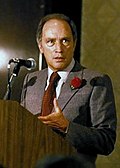

Photograph of Pierre Elliot Trudeau

The Canadian Charter of Rights and Freedoms (French: Charte canadienne des droits et libertés), often simply referred to as the Charter in Canada, is a bill of rights entrenched in the Constitution of Canada, forming the first part of the Constitution Act, 1982. The Charter guarantees certain political rights to Canadian citizens and guarantees the civil rights of everyone in Canada. It is designed to unify Canadians around a set of principles that embody those rights. The Charter was proclaimed in force by Queen Elizabeth II of Canada on April 17, 1982, as part of the Constitution Act, 1982.

The Charter was preceded by the Canadian Bill of Rights, enacted in 1960, which was a federal statute rather than a constitutional document. The Bill of Rights exemplified an international trend towards formalizing human rights protections following the United Nations' Universal Declaration of Human Rights, instigated by the country's movement for human rights and freedoms that emerged after World War II. As a federal statute, the Bill of Rights could be amended through the ordinary legislative process and had no application to provincial laws. The Supreme Court of Canada also narrowly interpreted the Bill of Rights, showing reluctance to declare laws inoperative. Between 1960 and 1982, only five of the thirty-five cases concerning the Bill of Rights that were heard by the Supreme Court of Canada resulted in a successful outcome for claimants. The relative ineffectiveness of the Canadian Bill of Rights motivated many to improve rights protections in Canada. The British Parliament formally enacted the Charter as a part of the Canada Act 1982 at the request of the Parliament of Canada in 1982, the result of the efforts of the government of Prime Minister Pierre Trudeau.

The Charter greatly expanded the scope of judicial review, because it is more explicit in its guarantee of rights and the role of judges in enforcing them than was the Canadian Bill of Rights. Canadian courts, when confronted with violations of Charter rights, have struck down unconstitutional federal and provincial statutes and regulations or parts of statutes and regulations, as they did when Canadian case law was primarily concerned with resolving issues of federalism. The Charter, however, granted new powers to the courts to enforce remedies that are more creative and to exclude more evidence in trials. These powers are greater than what was typical under the common law and under a system of government that, influenced by Canada's parent country the United Kingdom, was based upon Parliamentary supremacy. As a result, the Charter has attracted both broad support from a majority of the electorate and criticisms by opponents of increased judicial power. The Charter applies only to government laws and actions (including the laws and actions of federal, provincial, and municipal governments and public school boards), and sometimes to the common law, not to private activity. (Full article...)


Did you know...

  • ... that, in the cases of Klayman v. Obama and ACLU v. Clapper, US district courts issued conflicting rulings on the constitutionality of bulk data collection by the US government?
  • ... that in 2011, Nitehawk Cinema successfully lobbied to overturn a Prohibition-era liquor law that prevented movie theaters in New York from serving alcohol?

Selected images

Selected case

Case law, also used interchangeably with common law, is a law that is based on precedents, that is the judicial decisions from previous cases, rather than law based on constitutions, statutes, or regulations. Case law uses the detailed facts of a legal case that have been resolved by courts or similar tribunals. These past decisions are called "case law", or precedent. Stare decisis—a Latin phrase meaning "let the decision stand"—is the principle by which judges are bound to such past decisions, drawing on established judicial authority to formulate their positions. (Full article...)


An aerial photograph of Diego Garcia

R v Secretary of State for Foreign and Commonwealth Affairs, ex parte Bancoult (No 2) [2008] UKHL 61 is a UK constitutional law case in the House of Lords concerning the removal of the Chagos Islanders and the exercise of the Royal Prerogative. The Chagos Islands, acquired by the United Kingdom in 1814, were reorganised as the British Indian Ocean Territory (BIOT) in 1965 for the purpose of removing its inhabitants. Under a 1971 ordinance, the Chagossians were forcibly removed, and the central island of Diego Garcia leased to the United States for use as a military outpost.

In 2000, Olivier Bancoult brought a judicial review claim against the Secretary of State for Foreign and Commonwealth Affairs for the initial ordinance which led to the Chagossian removal. Bancoult sought a writ of certiorari on the grounds that the ordinance was ultra vires ("beyond power" – that is, that the ordinance had been made without legal authority), a claim upheld by both the Divisional Court and the Court of Appeal. In response, Robin Cook, the Foreign Secretary, repealed the 1971 ordinance and announced he would not appeal against the decision, allowing the Chagossians to return home.

In 2004, an Order in Council, the British Indian Ocean Territory (Constitution) Order 2004 [wikidata], was produced, again reinstating the off-limits nature of the Chagos Islands. Bancoult brought a second case, arguing that this Order was again ultra vires and unreasonable, and that the British government had violated legitimate expectation by passing the second Order after giving the impression that the Chagossians were free to return home.

The new Order was again struck down by the Divisional Court and Court of Appeal before proceeding to the House of Lords where it was heard by Lords Hoffmann, Bingham, Rodger, Carswell and Mance between 30 June and 3 July 2008. In their judgment, issued on 22 October 2008, the Lords decided by a 3–2 majority to uphold the new Order in Council, stating that it was valid and, although judicial review actions could look at Orders in Council, the national security and foreign relations issues in the case barred them from doing so. In addition, Cook's statement had not been clear and unambiguous enough to provide legitimate expectation. (Full article...)

More Did you know (auto-generated)

  • ... that the Women Lawyers Association in Malawi has worked with Amal Clooney to create a chatbot that gives women free legal advice in their native languages?
  • ... that a Bangladeshi government agency collected ৳6.5 billion (equivalent to US$150 million in 2023) from corruption suspects, but a court ruled it was illegal?
  • ... that Margarethe Hardegger established an illegal abortion clinic in her own home?
  • ... that in his autobiography, openly gay footballer Thomas Hitzlsperger criticises high-profile players for promoting gay rights while working in countries where homosexuality is illegal?
  • ... that Singaporean broadcaster Lee Fook Hong legally changed his name to Lee Dai Sor (literally 'Lee Big Fool' in Cantonese) after being accused of tax evasion?
  • ... that The Bootleggers portrays the illegal alcohol trade during the Prohibition era of the Roaring '20s?
22 June 2026 – China–United States relations
China imposes export controls on 10 U.S. companies and bars government procurement from 46 others in response to a U.S. blacklist targeting Chinese firms. The measures take effect immediately. (AFP via Daily Tribune)
22 June 2026 – 2024 South Korean martial law crisis
A South Korean court sentences former justice minister Park Sung-jae to 25 years in prison for being involved in former president Yoon Suk Yeol's martial law declaration. Prosecutors state that Park assisted preparations for implementing the measure. (AFP via Khmer Times)
22 June 2026 –
Egypt's security forces detain 87 Egyptians and 136 other foreigners over illegal gold mining and smuggling along the Sudanese border. (The Independent)
21 June 2026 – Middle Eastern crisis
Israeli defense minister Israel Katz says that Israeli troops will not withdraw from the illegally occupied Beaufort Castle, Lebanon. (Al Jazeera)
19 June 2026 – Sudanese civil war
The Sudanese human rights organization Emergency Lawyers reports that nine civilians have been killed in a Rapid Support Forces (RSF) drone strike on a passenger vehicle carrying civilians in North Darfur. Additionally, another drone struck the Um Bayada market, causing a massive fire. (Middle East Monitor) (Darfur24)

General images

The following are images from various law-related articles on Wikipedia.

Topics

Quality content

Subcategories

WikiProjects

Associated Wikimedia

The following Wikimedia Foundation sister projects provide more on this subject:

Discover Wikipedia using portals
