


Portal:Georgia (country)


|
|

|

|

|

|
General images -
-
 Writer and publicist Grigol Robakidze (from Culture of Georgia (country))
 -
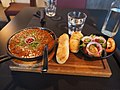 Chashushuli with bread and salad (from Georgian cuisine)
 -
 Ambrosius of Georgia opposed the Soviet regime, for which he faced repressions during the Red Terror (from History of Georgia (country))
 -
 Patera depicting Marcus Aurelius uncovered in central Georgia, 2nd century AD. (from History of Georgia (country))
 -
 King Mirian III established Christianity in Georgia as the official state religion in 324. (from History of Georgia (country))
 -
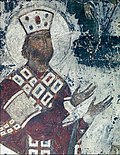 George III as depicted on a medieval fresco from Vardzia (from History of Georgia (country))
 -
 Pirosmani in c. 1880 (from Niko Pirosmani)
 -
 Nino Ananiashvili (from Culture of Georgia (country))
 -
 Leaders of Georgian independence movement in late 1980s, Zviad Gamsakhurdia (left) and Merab Kostava (right) (from History of Georgia (country))
 -
 Portrait of Alexander Garanov, 1906, Art Museum of Georgia (from Niko Pirosmani)
 -
 White Sow with Piglets (from Niko Pirosmani)
 -

-
 Members of the National Council of Georgia, after declaring independence of Georgia, Tbilisi May 26, 1918 (from History of Georgia (country))
 -
 Sandro Akhmeteli, a leading Georgian theater director. (from Culture of Georgia (country))
 -
 Georgian cuisine collage (from Culture of Georgia (country))
 -
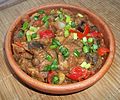 Ajapsandali (from Georgian cuisine)
 -
 Coronation of Demetrius I, a fresco from Matskhvarishi, 1140 (from History of Georgia (country))
 -
 A page from a 12th-century Gelati Gospel, an example of Georgian illuminated manuscripts from the Middle Ages (from Culture of Georgia (country))
 -
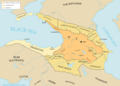
 Kingdom of Diauehi. (from History of Georgia (country))
 -
 Black Lion, 1905 (from Niko Pirosmani)
 -
 Princess Ekaterine resisted Turkish encroachment in Western Georgia. (from History of Georgia (country))
 -
 Photos of the 9 April 1989 Massacre victims (mostly young women) on billboard in Tbilisi (from History of Georgia (country))
 -
-
 The construction of Svetitskhoveli Cathedral in Mtskheta, now a UNESCO World Heritage Site, was initiated in the 1020s by George I. (from History of Georgia (country))
 -
 Janitor (from Niko Pirosmani)
 -
 A Tatar Fruiterer, 1910, Georgian National Museum (from Niko Pirosmani)
 -
 Lisa Batiashvili, leading Georgian violinist of her generation. (from Culture of Georgia (country))
 -
 Chakapuli (from Georgian cuisine)
 -
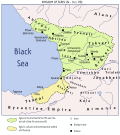 Kingdom of Lazica. (from History of Georgia (country))
 -
 Dambalkhacho cheese. (from Georgian cuisine)
 -
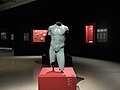 2nd century BC bronze torso from Western Georgia, displayed at the Georgian National Museum (from Culture of Georgia (country))
 -
 Self-portrait, 1900, Private collection (from Niko Pirosmani)
 -
-
 Ilia Chavchavadze, leader of the Georgian national revival in the 1860s. (from History of Georgia (country))
 -
 Muraba made from walnut (from Georgian cuisine)
 -
 Frescoes from the Svetitskhoveli Cathedral, an example of Georgian medieval art depicting ships and monsters at sea. (from Culture of Georgia (country))
 -
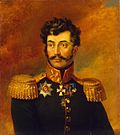 Roman Bagration, member of a Georgian military family, participated in campaigns to recapture historically Georgian lands from the Ottoman Empire. (from History of Georgia (country))
 -
 A Bear on a Moonlit night (from Niko Pirosmani)
 -
 19th century Georgian noble family: General Solomon Makashvili and family around 1900 (from History of Georgia (country))
 -
 A miniature from the 1824 manuscript of Amiran-Darejaniani copied by David Tumanov (H-384, National Center of Manuscripts). (from Culture of Georgia (country))
 -
 Churchkhela (from Georgian cuisine)
 -
 Ceremonial crown of the Georgian high nobility (from History of Georgia (country))
 -

-
 Jason Kereselidze, a National Hero of Georgia, one of many Georgians executed by the Soviets (from History of Georgia (country))
 -
 Spinach pkhali (from Georgian cuisine)
 -
 Royal armour of King Alexander III, dating back to the early 1600s. Held at the Georgian National Museum. (from History of Georgia (country))
 -
 Iranian Lion, from 1862 until 1918, Art Museum of Georgia (from Niko Pirosmani)
 -
 A Peasant Woman with Children Going to Fetch Water, 1900s, Art Museum of Georgia (from Niko Pirosmani)
 -

-
 Details from Pirosmani's paintings Threshing and Fisherman in a Red Shirt on the 5 lari banknote of the 2017 series. (from Niko Pirosmani)
 -
Ceremonial crown of the Georgian high nobility, an example of metalwork from the early modern period (from Culture of Georgia (country))
-
 Eduard Shevardnadze, second President of Georgia (1995–2003) (from History of Georgia (country))
 -
 The Baku–Tbilisi–Ceyhan pipeline project (from History of Georgia (country))
 -
 Queen Tamar and her father King George III, fresco from Vardzia. (from History of Georgia (country))
 -
 Kharcho (from Georgian cuisine)
 -
 Niko Pirosmani on a Georgian lari banknote of the 2002 series. (from Niko Pirosmani)
 -
 British troops marching in Batumi, Georgia in 1920. Following World War I, Britain replaced German troops in Georgia (from History of Georgia (country))
 -
 A Fisherman, 1900s, Art Museum of Georgia (from Niko Pirosmani)
 -
 Lobio (from Georgian cuisine)
 -
 Still Life (from Niko Pirosmani)
 -
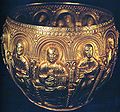 Bedia Cup of King Bagrat III of Georgia, 999 AD (from History of Georgia (country))
 -
 Location of Georgia (including Abkhazia and South Ossetia) and the Russian part of North Caucasus. (from History of Georgia (country))
 -

-
 Akaki Tsereteli, prominent Georgian poet and national liberation movement figure. (from History of Georgia (country))
 -
 White Cow on a Black Background, 1915, Private collection (from Niko Pirosmani)
 -

-
 King David the Builder, one of Georgia's greatest kings. (from History of Georgia (country))
 -
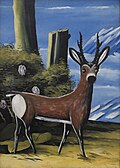 A Doe against Landscape (Stag), 1913, Art Museum of Georgia (from Niko Pirosmani)
 -
 Little Girl with a Balloon, 1900s, Art Museum of Georgia (from Niko Pirosmani)
 -
Georgian parade armour with golden plates (from Culture of Georgia (country))
-
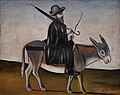 Healer on a Donkey, 1900s, Sighnaghi Museum (from Niko Pirosmani)
 -
 Monastery of Iviron, one of several monastic centers founded abroad by Georgians of the Early Middle Ages. (from History of Georgia (country))
 -
 Batumi port, 1900s, Art Museum of Georgia (from Niko Pirosmani)
 -
 Adjarian khachapuri. (from Georgian cuisine)
 -
 Titsian Tabidze, a Georgian poet persecuted by the Soviet authorities (from Culture of Georgia (country))
 -
 Mikheil Saakashvili with George W. Bush. (from History of Georgia (country))
 -
 A plate of khinkali (from Georgian cuisine)
 -
 A medieval illustration of the Georgian king George IV Lasha waging war against the Mongols in 1220. King George is shown in blue garment on a white horse holding a whip. A depiction from La Flor des estoires de la terre d'Orient by Hayton of Corycus. (from History of Georgia (country))
 -
Still-Life, 1900s, Art Museum of Georgia (from Niko Pirosmani)
-
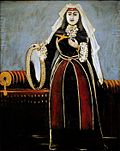 A Georgian Woman with Tamboreen / Georgian woman with Lechaki, 1910s, Private collection (from Niko Pirosmani)
 -

-
 Leek with walnut paste (from Georgian cuisine)
 -
 Tatar camel driver (from Niko Pirosmani)
 -
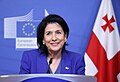 President Zourabichvili (from History of Georgia (country))
 -
 Wall Painting in Georgia's ancient monastery, Shio-Mghvime (from Culture of Georgia (country))
 -
 Bachkovo Monastery in Bulgaria was one of the centers of Georgian scholarship in the Balkans (from History of Georgia (country))
 -
 Giraffe, 1900s, Art Museum of Georgia (from Niko Pirosmani)


_3.jpg)


,_Portrait_of_Alexander_Garanov._1906._Oil_on_oil-cloth,_109x90_cm._The_State_Museum_of_Fine_Arts_of_Georgia,_Tbilisi.jpg)

.jpg)


_A_Story_of_Encounters,_2023-2024,_Art_%26_History_Museum,_Brussels.jpg)

-en.svg)


.jpg)


_nobility.png)
.JPG)


.jpg)


.jpg)


.jpg)


._Oil_on_oilcloth._130X105_cm._Private_collection.jpg)


.jpg)


.jpg)


|

|
|
.svg)


|


|
|