


Wuheqilin
Wuheqilin | |
|---|---|
 | |
| Born | Fu Yu (付昱) 22 July 1988 Shangzhi, Heilongjiang, China |
| Occupation | Artist |
Fu Yu (Chinese: 付昱; born 22 July 1988), known professionally as Wuheqilin (Chinese: 乌合麒麟; pinyin: Wū Hé Qí Lín; lit. 'Rabble Qilin') is a Chinese illustrator and political cartoonist. His hometown is Harbin. He describes himself as a "Wolf warrior painter". He is famous for his artwork Peace Force (Chinese: 《和平之师》), which depicts an Australian soldier killing an Afghan child, a reference to the findings of the Brereton Report.
Biography
[edit]Since his grandparents were soldiers in the Korean War, Wuheqilin became a party loyalist when he was young. After graduating from a university in Changchun with a degree in art and design, Wuheqilin served as an intern in an animation and film production company in Beijing in 2009. Later, a director left the company and created his own studio, with whom Wuheqilin worked in Zhongguancun. At the end of 2013, he was invited to Shanghai Film Art Academy (zh:上海电影艺术学院) to give a lecture on computer graphics, and started a painting training institute called "Wuhe" in early 2014.[1]
Wuheqilin describes himself as a "Wolf Warrior artist".[2]
Significant works
[edit]A dispute between China and Australia arose in 2020 when a member of China's foreign ministry posted online a picture of Wuheqilin's image Peace Force, which depicts an Australian soldier preparing to slit an Afghan child's throat.[3] The image is a reference to the Brereton Report, which exposed the murder of more than three dozen Afghan civilians by Australian troops.[3] Australian Prime Minister Scott Morrison demanded an apology, which China declined to give.[3] Wuheqilin then created another image mocking Morrison.[3]
Wuheqilin satirized writer Fang Fang with his image Crown of a Jester, depicting Fang Fang as a court jester for a uniformed white master sitting on a throne while Fang Fang performs for Western journalists in the gallery.[4]: 130 It portrayed her as having "handed over the knife" with which her "Western sponsors" could attack China.[4]: 130
After Chinese consumers started threatening to boycott H&M, Nike and other brands that have joined a call to avoid using cotton produced in Xinjiang,[5] Wuheqilin published his new artwork Blood Cotton Initiative to criticize the Better Cotton Initiative.[6]
After the May 2021 Group of Seven (G7) Foreign Ministers meeting, Wuheqilin created an image satirizing a photograph of G7 officials by portraying them in old-style military uniforms.[3] Wuheqilin wrote, "The last time when these guys colluded to [suppress] China was in 1900; 120 years have passed, they are still dreaming."[3] The image went viral on social media.[3]
Wuheqilin's created his artwork Shanghai Must Not Fall during the 2022 Shanghai COVID-19 outbreak.[4]: 137–138 The illustration depicts hazmat-clad figures shutting gates as a swarm of snakes attempt to pour through.[4]: 138
Reception
[edit]Wuheqilin's works are generally received positively by the Chinese public and by the state.[4]: 125 Following Wuheqilin's image satirizing the G7 Foreign Ministers, Chinese Communist Party-owned tabloid Global Times praised Wuheqilin as a Chinese patriot.[3] A common view among Chinese is that Wuheqilin is a national hero whose works rebut the West's criticisms of China's internal affairs.[4]: 125
Guancha has described Wuheqilin as having "fought tooth and nail against anti-China forces so that more patriotic youth can speak up."[4]: 131
Academic Suisheng Zhao describes Wuheqilin as having made his reputation "with his scathing images of the United States as a blood-soaked, irrational, medieval realm[.]"[3] Wuheqilin's works became increasingly popular domestically after his Peace Force illustration.[4]: 125
Gallery
[edit]-
 BAT
BAT -
 Blood Cotton Initiative
 -
 Separation of powers
 -
 丰碑
丰碑 -
 Crown A Jester
 -
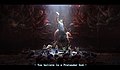 Pretender God
 -
 Floyds, can you breathe?
 -
 剑来
剑来 -
 Command & Conquer
 -
 国家公祭
国家公祭 -
 Top 10 traitors
 -
 Cannon Fodder
 -
 白宫粉刷匠
白宫粉刷匠 -
 To Morrison
 -
 The artistic image Peace Force (和平之师)


References
[edit]- ^ "讽刺漫画家乌合麒麟照片资料简介" [Caricature artist Wuhe Qilin photo profile]. 兵马俑在线 (www.wmxa.cn).
- ^ "'Wolf warrior' artist turns new chapter in Chinese propaganda artwork". Reuters. 2 December 2020.
- ^ a b c d e f g h i Zhao, Suisheng (2023). The Dragon Roars Back: Transformational Leaders and Dynamics of Chinese Foreign Policy. Stanford, California: Stanford University Press. pp. 169–170. doi:10.1515/9781503634152. ISBN 978-1-5036-3088-8. OCLC 1331741429.
- ^ a b c d e f g h Zhang, Shuyu (2025). "Manufacturing Consent and "Correct Collective Memory"". In Hillman, Ben; Ji, Fengyuan (eds.). The Communist Party of China: Understanding the Durability of the World's Most Powerful Political Organization. New York: Cambridge University Press. doi:10.1017/9781009668385. ISBN 978-1-009-66843-9.
- ^ Wee, Sui-Lee; Bradsher, Keith (25 March 2021). "Why Are China's Consumers Threatening to Boycott H&M and Other Brands?". The New York Times. Retrieved 30 October 2023.
- ^ "新疆棉花|「戰狼畫手」烏合麒麟新作諷刺BCI 圖中隱藏H&M、Nike" [Xinjiang Cotton|"Wolf Warrior Painter" Wuhe Kirin's new work satirizes BCI with H&M and Nike hidden in the picture]. www.hk01.com.
External links
[edit] Media related to Wuheqilin at Wikimedia Commons
