Following the prehistoric breakup of the supercontinentGondwana, Madagascar split from Africa during the Early Jurassic period, around 180 million years ago, and from the Indian subcontinent approximately 90 million years ago. This isolation allowed native plants and animals to evolve in relative seclusion. As a result, Madagascar is a biodiversity hotspot and one of the world's 17 megadiverse countries, with over 90% of its wildlife being endemic. The island has a subtropical to tropical maritime climate.
Madagascar was first permanently settled during or before the mid-first millennium CE (roughly 500 to 700) by Austronesian peoples, presumably arriving on outrigger canoes from present-day Indonesia. These were joined around the ninth century by Bantu groups crossing the Mozambique Channel from East Africa. Other groups continued to settle on Madagascar over time, each one making lasting contributions to Malagasy cultural life. Consequently, there are 18 or more classified peoples of Madagascar, the most numerous being the Merina of the central highlands. (Full article...)
This is a Featured article, which represents some of the best content on English Wikipedia..
Lemon and mango pickles (achards) traditionally accompany meals in the northwestern coastal regions of Madagascar.
Malagasy cuisine (Malagasy: Sakafo malagasy; French: Cuisine malgache) encompasses the diverse culinary traditions of the Indian Ocean island of Madagascar. Foods eaten in Madagascar reflect the influence of Southeast Asian, African, Oceanian, Indian, Chinese and European migrants that have settled on the island since it was first populated by seafarers from Borneo between 100 CE and 500 CE. Rice, the cornerstone of the Malagasy diet, was cultivated alongside tubers and other Southeast Asian and Oceanian staples by these earliest settlers. Their diet was supplemented by foraging and hunting wild game, which contributed to the extinction of the island's bird and mammalmegafauna. These food sources were later complemented by beef in the form of zebu introduced into Madagascar by East African migrants arriving around 1,000 CE.
Trade with Arab and Indian merchants and European transatlantic traders further enriched the island's culinary traditions by introducing a wealth of new fruits, vegetables, and seasonings. Throughout almost the entire island, dishes comprising the contemporary cuisine of Madagascar typically consist of a base of rice served with an accompaniment; in the official dialect of the Malagasy language, the rice is termed vary ([ˈvarʲ]), and the accompaniment, laoka ([ˈlokə̥]). The many varieties of laoka may be vegetarian or include animal proteins, and typically feature a sauce flavored with such ingredients as ginger, onion, garlic, tomato, vanilla, salt, curry powder, or, less commonly, other spices or herbs. In parts of the arid south and west, pastoral families may replace rice with maize, cassava, or curds made from fermented zebu milk. A wide variety of sweet and savory fritters as well as other street foods are available across the island, as are diverse tropical and temperate-climate fruits. Locally produced beverages include fruit juices, coffee, herbal teas and teas, and alcoholic drinks such as rum, wine, and beer. (Full article...)
A ring-tailed lemur (Lemur catta), the most familiar of Madagascar's numerous species of lemur.
The composition of Madagascar's wildlife reflects the fact that the island has been isolated for about 88 million years. The prehistoric breakup of the supercontinent Gondwana separated the Madagascar-Antarctica-India landmass from the Africa-South America landmass around 135 million years ago. Madagascar later split from India about 88 million years ago, allowing plants and animals on the island to evolve in relative isolation.
As a result of the island's long isolation from neighboring continents, Madagascar is home to an abundance of plants and animals found nowhere else on Earth. Approximately 90 percent of all plant and animal species found in Madagascar are endemic, including the lemurs (a type of strepsirrhine primate), the carnivorous fossa and many birds. This distinctive ecology has led some ecologists to refer to Madagascar as the "eighth continent", and the island has been classified by Conservation International as a biodiversity hotspot. As recent as 2021, the "smallest reptile on earth" was also found in Madagascar, Brookesia nana, also known as the nano-chameleon. (Full article...)
On the evening of 29 March 1947, coordinated surprise attacks were launched by Malagasy nationalists, armed mainly with spears, against military bases and French-owned plantations in the eastern part of the island concentrated around Moramanga and Manakara. The nationalist cause was rapidly adopted in the south and spread to the central highlands and the capital of Antananarivo by the following month, with the number of Malagasy nationalist fighters estimated at over one million. (Full article...)
Image 5Ramilison Besigara, leader of the Malagasy hiragasy troupe Tarika Ramilison Fenoarivo (from Culture of Madagascar)
Image 6Malagasy ancestry reflects a blend of Southeast Asian, Oceanian, and Bantu (Southeast African) roots. (from Madagascar)
Image 7The taro (saonjo in Malagasy) is, according to an old Malagasy proverb, "the elder of the rice" (Ny saonjo no zokin'ny vary), and was also a staple diet for the proto-Austronesians (from History of Madagascar)
Image 18National monument in Moramanga commemorating the beginning of the Malagasy Uprising on 29 March 1947. Between 11,000 and 90,000 Malagasy died during the uprising, which lasted nearly two years. (from Madagascar)
Image 27Moraingy is a traditional martial art of Madagascar. (from Madagascar)
Image 28Madagascar—Gathering of The People for The Making of Laws (LMS, 1869, p.52) (from History of Madagascar)
Image 29Toy animals made from raffia, a native palm (from Madagascar)
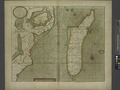
Image 30Map of Madagascar and the western portion of the East Indies, circa 1702–1707 (from History of Madagascar)
Image 31Landing of the 40th Bataillon de Chasseur à Pieds in Majunga, between 5 May and 24 May 1895. (from History of Madagascar)
Image 32Malagasy Embassy to Europe in 1863. Left to right: Rainifiringa Ralaimaholy, Rev. John Duffus and Rasatranabo aka Rainandrianandraina. (from History of Madagascar)
Image 33Rex and Riz cinemas in Antananarivo, Madagascar. (from Culture of Madagascar)
Image 34Nosy Iranja, one of the international tourism destinations in Madagascar (from Madagascar)
Image 36Vaγimba- "Those of the forest" in Proto–Southeast Barito, the reconstructed ancestor of the Southeast Barito languages, which includes the languages spoken by the Dayak peoples of the Barito River in Borneo (pictured) (from History of Madagascar)
Image 42Moraingy is a traditional martial art of Madagascar. (from Culture of Madagascar)
Image 43Radama I, the first monarch of the kingdom unified central Madagascar. (from History of Madagascar)
Image 44An Austronesian outrigger canoe; Malagasy vahoaka "people" is from Proto-Malayo-Polynesian*va-waka "people of the canoe". The Vahoaka Ntaolo, the first Austronesian ancestors of the Malagasy, probably used similar canoes to reach the great island from Indonesia (from History of Madagascar)
Image 46Canoe-sarcophagus of the Dayak: a burial that recalls the Malagasy tradition that former Ntaolo Vazimba and Vezo buried their dead in canoe-sarcophagi in the sea or in a lake (from History of Madagascar)
Image 47A Sumatran village showing several traditional houses (Malagasy levu). The vahoaka ntaolo villages of Madagascar were probably similar in the first millennium AD. This model is still currently present on every coast and in the remote inland areas and forests. (from History of Madagascar)







.jpg)



_Madagascar.jpg)


.svg)


