Mons Herodotus
| Mons Herodotus | |
|---|---|
 Apollo 15 image | |
| Highest point | |
| Elevation | 6995 m (summit)[1] |
| Listing | Lunar mountains |
| Coordinates | 27°30′N 52°54′W / 27.5°N 52.9°W |
| Naming | |
Language of name | Latin |
| Geography | |
 | |
| Location | the Moon |

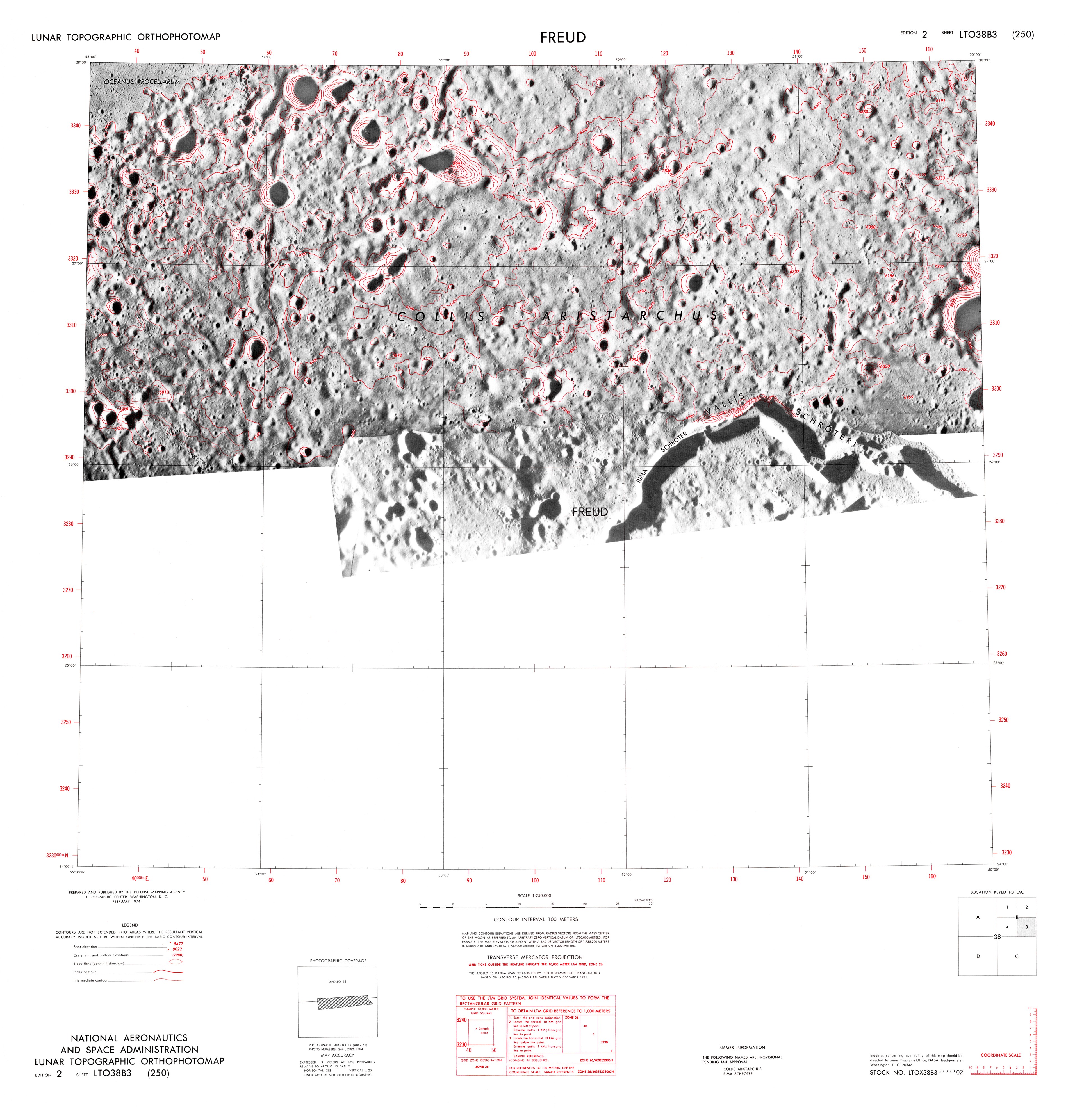
Mons Herodotus is a small lunar mountain north of the crater Herodotus. With a length of 6.5 km, it lies on the rugged Aristarchus Plateau and rises approximately 900 m above the surrounding pyroclastic blanket. Originally, it was interpreted as part of the ejecta from the Imbrium formation. However, it may instead be an extruded volcano cone.[2]
References
[edit]- ^ LTO-38B3, Freud, Lunar Topographic Orthophotomap Series, February 1974
- ^ Glotch, Timothy D.; et al. (August 2021). "The Scientific Value of a Sustained Exploration Program at the Aristarchus Plateau". The Planetary Science Journal. 2 (4). id. 136. Bibcode:2021PSJ.....2..136G. doi:10.3847/PSJ/abfec6.