


Dualchi
 | This article includes a list of references, related reading, or external links, but its sources remain unclear because it lacks inline citations. (April 2022) |
Dualchi
Duarche (Sardinian) | |
|---|---|
| Comune di Dualchi | |
.jpg) View of Dualchi | |
 Coat of arms | |
  Dualchi Location of Dualchi in Sardinia | |
| Coordinates: 40°14′N 8°54′E / 40.233°N 8.900°E | |
| Country | Italy |
| Region | Sardinia |
| Province | Nuoro (NU) |
| Government | |
| • Mayor | Ignazio Piras |
| Area | |
• Total | 23.41 km2 (9.04 sq mi) |
| Elevation | 321 m (1,053 ft) |
| Population (2026)[2] | |
• Total | 559 |
| • Density | 23.9/km2 (61.8/sq mi) |
| Demonym | Dualchesi |
| Time zone | UTC+1 (CET) |
| • Summer (DST) | UTC+2 (CEST) |
| Postal code | 08010 |
| Dialing code | 0785 |
| Website | Official website |
Dualchi (Sardinian: Duarche) is a village and comune (municipality) in the Province of Nuoro in the autonomous island region of Sardinia in Italy, located about 110 kilometres (68 mi) north of Cagliari and about 40 kilometres (25 mi) west of Nuoro. It has 559 inhabitants.[2]
Dualchi borders the municipalities of Aidomaggiore, Birori, Borore, Bortigali, Noragugume, Sedilo, and Silanus.
History
[edit]Already inhabited area during the Nuragic period, as suggested by the presence in the territory of some Nuraghes, Dualchi belonged to the Judicate of Torress in the Middle Ages and was part of the curatoria of Marghine. The village came under the influence of the Arborean Judges, when such curatoria became absorbed into the Arborean curatoria of Parte Barigadu. Upon the fall of the Arborean Judicate (1429), Dualchi became part of the Aragonese marquisate of Oristano. During the war, fought in 1478, between the Marquis of Oristano Leonardo Alagon and the viceroy of Aragon, the inhabitants of Dualchi swore allegiance to the Marquis and thereupon fought against the Aragonese, but they were defeated. The town then passed under Aragonese rule and became a fief thereof. In the 18th century it was incorporated into the marquisate of Marghine, the owners of which were the Pimentel. From the Pimentel it passed to the Tellez-Giron, to which it was ransomed in 1839 with the abolition of the feudal system.
Demographics
[edit]As of 2026, the population is 559, of which 47.9% are male, and 52.1% are female. Minors make up 9.7% of the population, and seniors make up 36.0%.[2]
Historical population | |||||||||||||||||||||||||||||||||||||||||||||||||||||||
|
| ||||||||||||||||||||||||||||||||||||||||||||||||||||||
| Source: ISTAT[3][4] | |||||||||||||||||||||||||||||||||||||||||||||||||||||||
Immigration
[edit]As of 2025, immigrants make up 4.9% of the population. The 5 largest foreign countries of birth are Germany, Morocco, Romania, Switzerland, and Ukraine.[5]
Cuisine
[edit]-
 Traditional bread-made dolls from Dualchi
 -
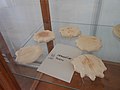 Spianata (Pane 'e poddine) from Dualchi


References
[edit]- ^ "Superficie di Comuni Province e Regioni italiane al 9 ottobre 2011" (in Italian). ISTAT.
- ^ a b c "Resident population". ISTAT.
- ^ "Popolazione residente dei comuni. Censimenti dal 1861 al 1991" [Resident population of the municipalities. Censuses from 1861 to 1991] (PDF) (in Italian). ISTAT. Archived from the original (PDF) on 2025-11-12.
- ^ "Resident population - Time series". ISTAT.
- ^ "Resident population by sex, municipality and citizenship". ISTAT.
External links
[edit]

 | This Sardinia location article is a stub. You can help Wikipedia by adding missing information. |