


California State Parks
 Seal of the California Department of Parks and Recreation | |
| Agency overview | |
|---|---|
| Formed | 1927 |
Preceding agencies |
|
| Jurisdiction | State of California |
| Headquarters | 715 P Street, Sacramento, California 95814 |
| Employees | 1,835.1 authorized permanent full-time positions and 1,543.5 temporary position-year equivalents (FY 2022–23)[1] |
| Annual budget | $1.019 billion (FY 2024–25 enacted expenditures)[2] |
Agency executive |
|
Parent agency | California Natural Resources Agency |
| Website | parks.ca.gov |
The California Department of Parks and Recreation (CDPR), branded as California State Parks to the public, is a department of the California Natural Resources Agency within the California state government. The department administers the California State Park System and operates state programs for historic preservation, off-highway vehicle recreation, recreational boating, and local park grants.[3][4]
The system traces its origins to the Yosemite Grant of 1864, when the federal government ceded Yosemite Valley and the Mariposa Grove to California for preservation, and to the state's acquisition of Big Basin Redwoods in 1902.[5] The State Park Commission was created in 1927, and the modern Department of Parks and Recreation was formed in the 1960s after the consolidation of the Division of Beaches and Parks, the Division of Recreation, and the Division of Small Craft Harbors.[5]
As of the department's 2022–23 statistical report, the system included 280 classified units and major unclassified properties totaling 1,650,336.16 acres (667,867.35 ha).[1] The department describes the system as including over 340 miles (550 km) of coastline, 970 miles (1,560 km) of lake and river frontage, 15,000 campsites, 5,200 miles (8,400 km) of trails, 3,195 historic buildings, and more than 11,000 known prehistoric and historic archaeological sites.[3] Armando Quintero was appointed director by Governor Gavin Newsom in August 2020.[6]
History
[edit].jpeg)
Origins (1864–1926)
[edit]California's first conserved public lands, the Yosemite Grant, were ceded by Congress to the state in 1864 for "public use, resort, and recreation."[5] The state administered Yosemite Valley and the Mariposa Grove until 1906, when both were returned to federal jurisdiction and incorporated into Yosemite National Park.[5] The legislature acquired Big Basin Redwoods in 1902, which is regarded as the first park created with the express purpose of becoming a state park.[5] Until 1927, individual parks were administered by separate commissions or departments.[5]
Formation of the State Park System (1927–1960)
[edit]In 1927, the legislature, with the support of Governor C. C. Young, created the State Park Commission.[5] Early commission members included Major Frederick R. Burnham, W. F. Chandler, William E. Colby, Henry W. O'Melveny, and Dr. Ray Lyman Wilbur.[7]
In 1928, California voters approved a $6 million park bond. Frederick Law Olmsted Jr. completed a statewide survey identifying candidate park lands, and Newton B. Drury served as acquisition officer for the new commission.[5] The Division of Beaches and Parks was reorganized in 1951 under the Department of Natural Resources, with Drury as its director.[5]
Department of Parks and Recreation (1961–present)
[edit]The Department of Parks and Recreation was established in 1961 under Governor Pat Brown through the consolidation of the Division of Beaches and Parks, the Division of Recreation, and the Division of Small Craft Harbors.[5] William Penn Mott Jr. served as director from 1967 to 1975 under Governor Ronald Reagan and later directed the National Park Service.[8]
In May 2008, the National Trust for Historic Preservation placed the state park system on its list of America's Most Endangered Places, citing budget cuts and deferred maintenance.[9] On January 10, 2008, Governor Arnold Schwarzenegger proposed indefinite closure of 48 parks to address a projected $14.5 billion budget shortfall.[10] The closures were averted in 2009 through one-time reductions in maintenance and services.[11]
In July 2012, Director Ruth Coleman resigned after auditors discovered $54 million in unreported funds in the Parks and Recreation Fund and the Off-Highway Vehicle Trust Fund. The disclosure occurred while 70 parks were scheduled to close for lack of operating funds. A subsequent investigation found that funds in the Parks and Recreation Fund had been concealed from state finance authorities.[12][13]
In response to the financial crisis, Governor Jerry Brown appointed retired Major General Anthony L. Jackson of the United States Marine Corps as director on November 13, 2012.[14][15] Jackson commissioned an independent review by the Parks Forward Commission, which issued its final report in early 2015.[16]
The CZU Lightning Complex fires, which started on August 16, 2020, burned 86,509 acres across Santa Cruz and San Mateo counties and reached Big Basin Redwoods State Park.[17] The fires burned more than 97% of Big Basin and destroyed nearly every structure in the park, including the historic park headquarters, campgrounds, and employee housing.[18] Big Basin partially reopened on July 22, 2022, using a day-use reservation system; eight trail segments reopened in April 2023.[18]
A record wet winter in 2023 caused more than $210 million in storm damage to state parks, requiring temporary closures and emergency repairs.[19]
Recent expansion
[edit]In June 2024, Dos Rios State Park near the confluence of the San Joaquin and Tuolumne rivers opened to the public as California's first new state park in ten years.[20] In April 2026, Governor Gavin Newsom announced State Parks Forward, an initiative under which the department would begin planning and acquisition for three Central Valley parks (Feather River Park in Yuba County, San Joaquin River Parkway in Fresno and Madera counties, and Dust Bowl Camp in Kern County) and expand several existing parks. The department said the additions would increase the system to 283 parks if completed.[21]
Organization
[edit]Leadership and commission
[edit]The department is led by a director appointed by the governor. Armando Quintero was appointed director in August 2020 and took office on September 1, 2020.[6][22] Before joining the department, Quintero worked for the National Park Service and served as executive director of the Sierra Nevada Research Institute at the University of California, Merced.[22]
The State Park and Recreation Commission is a nine-member body appointed by the governor and confirmed by the State Senate. It approves general plans for state park units, approves the names and classifications of new units, and establishes general policies for the director's administration of the State Park System.[23]
Field operations are organized into 22 districts, four of which include off-highway vehicle parks, and many districts are further divided into sectors.[24]
Subdivisions
[edit]California Office of Historic Preservation
[edit]The California Office of Historic Preservation (OHP), formally established in 1975, administers federal and state historic-preservation programs and provides staff support for California's State Historic Preservation Officer and the State Historical Resources Commission.[25] OHP identifies, evaluates, and registers historic properties; administers the National Register of Historic Places, California Register of Historical Resources, California Historical Landmarks, and California Points of Historical Interest programs; coordinates the California Historical Resources Information System; and reviews federal and state undertakings affecting historic properties.[26][27]
OHP-coordinated programs have figured in California disaster recovery, including the post-Loma Prieta review of Santa Cruz's historic-district status[28] and a $5 million federal grant that funded eligibility review of about 500 historic buildings damaged in the 1994 Northridge earthquake.[29] OHP's 1988 publication Five Views: An Ethnic Historic Site Survey for California was an early state effort to document historic places associated with ethnic and minority communities.[30]
Off-Highway Motor Vehicle Recreation Division
[edit]The Off-Highway Motor Vehicle Recreation (OHMVR) Division was created by the Chappie–Z'berg Off-Highway Motor Vehicle Law of 1971 to manage off-highway vehicle recreation on state-owned land.[31] The division operates State Vehicular Recreation Areas (SVRAs), including Oceano Dunes, Hollister Hills, and Ocotillo Wells, and administers a grants and cooperative agreements program for OHV recreation areas, roads, and trails.[32][33] The program is funded from the Off-Highway Vehicle Trust Fund, which receives revenue from off-highway vehicle registration fees, fuel taxes attributed to off-highway use, and gate fees collected at SVRAs.[34]
Division of Boating and Waterways
[edit]The Division of Boating and Waterways (DBW) promotes recreational boating safety and access, administers boating grants and loans, supports boating law-enforcement and safety programs, and funds projects for boating infrastructure, beach restoration, abandoned-vessel abatement, and aquatic invasive species prevention.[35][36] The agency was reorganized as a division of the Department of Parks and Recreation under the Governor's Reorganization Plan No. 2 of 2012.[37]
Law enforcement
[edit]
The department employs sworn California State Parks Peace Officers, classified as State Park Rangers and State Park Lifeguards, who hold full peace officer authority under California Penal Code § 830.2(f).[38] Rangers are responsible for resource protection, visitor services, and law enforcement; lifeguards perform open-water rescue and beach patrol duties at coastal and inland water units.[39]
Operations and budget
[edit]The department reported 1,835.1 authorized permanent full-time positions and 1,543.5 authorized temporary position-year equivalents in fiscal year 2022–23.[1] Field operations are organized into 22 districts, four of which include off-highway vehicle parks.[24] The 2022–23 statistical report recorded 83,899,835 total visits, including 78,004,589 day-use visits and 5,895,246 overnight camping uses. It also reported $112.8 million in system revenue and $492.8 million in field-operations expenditures.[1]
For fiscal year 2024–25, the enacted Governor's Budget listed $1.019 billion in total expenditures for Department of Parks and Recreation programs, including support of the department, the Division of Boating and Waterways, and local assistance grants.[2] Major funding sources include the State Parks and Recreation Fund, the Off-Highway Vehicle Trust Fund, the Harbors and Watercraft Revolving Fund, federal funds, reimbursements, and bond funds.[2]
Voters approved Proposition 68 in June 2018, a $4.1 billion general obligation bond for natural resources programs that included $1.3 billion for parks and recreation projects, primarily local parks.[40] Day-use fees, camping fees, and annual passes are collected at park units under fee schedules set by the department.[41]
Camping and day-use reservations are managed through ReserveCalifornia, the department's official reservation service.[41] California State Parks switched to ReserveCalifornia on August 1, 2017.[42]
A Volunteers in Parks program supplements paid staffing. The department reported more than 27,000 volunteers contributing over 780,000 hours in 2023, supporting trail maintenance, interpretation, campground hosting, and resource protection across the system.[43] Independent partner organizations, including the California State Parks Foundation, a 501(c)(3) nonprofit that received IRS tax-exempt recognition in November 1969, support the system through advocacy, grantmaking, and volunteer programs.[44][45]
Park classification
[edit]Park units are classified by the State Park and Recreation Commission under Public Resources Code § 5019.50 et seq. into categories defined by their predominant scenic, recreational, historic, or natural-resource character.[46]
The 2022–23 statistical report grouped the system's 280 classified units and major unclassified properties as 89 State Parks, 62 State Beaches, 53 State Historic Parks, 33 State Recreation Areas, 16 State Natural Reserves, 9 State Vehicular Recreation Areas, 1 State Seashore, 1 State Marine Park, 1 Wayside Campground, and 15 unclassified properties.[1]
State Park
[edit]State Parks consist of relatively spacious areas of outstanding scenic or natural character, often also containing cultural or scientific values, established for the protection of those resources and for public enjoyment in a substantially natural condition.[46]
- State Parks in California
-

-

-


State Recreation Area
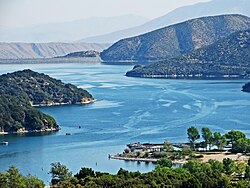
[edit]State Recreation Areas consist of areas selected and developed to provide multiple recreational opportunities, with terrain capable of withstanding extensive human impact and proximity to large population centers, major routes of travel, or proven recreational resources. Underwater Recreation Areas are nonmarine aquatic units selected and developed for surface and subsurface water-oriented recreation.[46]
- State Recreation Areas in California
-

-

-


.jpg)
State Vehicular Recreation Area
[edit]State Vehicular Recreation Areas are units managed for off-highway vehicle recreation and related outdoor use. They are operated by the Off-Highway Motor Vehicle Recreation Division.[32]
- State Vehicular Recreation Areas in California
-

-

-

.jpg)


State Beach
[edit]State Beaches consist of areas with frontage on the ocean or bays designed to provide beach-oriented recreational activities. Wayside Campgrounds consist of relatively small areas suitable for overnight camping with convenient access to major highways. State Seashores consist of relatively spacious coastline areas with frontage on the ocean or bays open to the ocean, possessing scenic or natural character and recreational, historical, archaeological, or geological values.[46]
- State Beaches in California
-

-

-


.jpg)

State Historic Park
[edit]Historical units are nonmarine areas established primarily to preserve objects of historical, archaeological, and scientific interest, archaeological sites, and places commemorating people or events.[46] The category includes battlegrounds, Spanish missions, historic estates, and colonial fortifications.
- State Historic Parks in California
-

-

-

.jpg)


State Reserve
[edit]State Reserves consist of areas embracing outstanding natural or scenic characteristics, or areas containing cultural resources of statewide importance. State Natural Reserves are selected and managed to preserve their ecology, fauna, flora, geological features, and scenic qualities in a condition of undisturbed integrity. State Cultural Reserves are selected and managed to preserve historic structures, cultural features, and areas of spiritual significance to California Native peoples.[46]
- State Reserves in California
-

-

-


State Wilderness and preserves
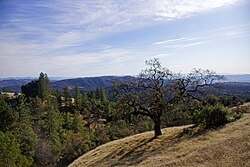
[edit]State Wildernesses are relatively undeveloped state-owned or leased lands that have retained their primeval character or have been restored to a near-natural appearance. State Wildernesses can be established within other units of the state park system. Natural Preserves and Cultural Preserves are smaller designated areas within larger units, protecting specific natural features such as endangered species and supporting ecosystems, or cultural features such as historic buildings, archaeological sites, or places of cultural significance.[46]
- State Wilderness areas in California
-

-

-


.jpg)
Marine managed areas
[edit]Marine managed areas are governed by the Marine Managed Areas Improvement Act, which establishes uniform classifications across state agencies, including State Marine Reserve, State Marine Park, State Marine Conservation Area, State Marine Cultural Preservation Area, and State Marine Recreational Management Area.[46]
- Marine managed areas in California
-

-


Tribal consultation and Reexamining Our Past
[edit]The state park system includes lands within the ancestral territories of California Native American tribes, and the department has formal policies for tribal consultation. Senate Bill 18 (2004) requires local governments to consult with California Native American tribes on general-plan amendments affecting tribal cultural places,[47] and Assembly Bill 52 (2014) added "tribal cultural resources" as a category subject to consultation under the California Environmental Quality Act.[48] Departmental Notice 2007-05, issued November 16, 2007, set the department's Native American Consultation Policy and Implementation Procedures, and a department-level Tribal Liaison was appointed in March 2013 under Governor Jerry Brown's Executive Order B-10-11.[49]
In June 2019, Governor Gavin Newsom issued a formal apology to California Native Americans for historical violence, exploitation, dispossession, and attempted destruction of tribal communities, and established the California Truth and Healing Council through Executive Order N-15-19.[50][51]
Following a June 2020 internal survey of state park units, California State Parks launched the Reexamining Our Past Initiative to identify and address derogatory place names, contested monuments and plaques, and interpretive programs that insufficiently contextualized California history.[52][53][54] On September 25, 2020, California Natural Resources Secretary Wade Crowfoot, State Parks Director Armando Quintero, and Caltrans Director Toks Omishakin announced steps to inventory and rename discriminatory features within the parks and state highway systems and to expand membership of the California Advisory Committee on Geographic Names.[55] The same day, Newsom issued a Statement of Administration Policy on Native American Ancestral Lands directing state entities to seek opportunities for tribal co-management of, and access to, lands within ancestral territories.[56]
The Tribal Affairs Program, housed within the Cultural Resources Division, administers the department's Native American Graves Protection and Repatriation Act responsibilities and a memorandum-of-understanding program with California Native American tribes.[57] Reinterpretation efforts are under way at units including Sutter's Fort State Historic Park, where the 2024 Interpretation Master Plan, developed with tribal partners, expanded coverage of Nisenan and Plains Miwok experiences and the fort's role in California's nineteenth-century history; a Draft Concept Plan was circulated for public comment in March 2026.[58][59][60][61][62]
Fort Ross State Historic Park, the site of the Russian-American Company's southernmost colony from 1812 to 1841, interprets the multicultural settlement of Russian, Alaska Native, and Kashia Pomo residents and lies on the ancestral homeland of the Kashia Band of Pomo Indians of the Stewarts Point Rancheria.[63]
The California Indian Heritage Center is a planned 51-acre park unit at the confluence of the American and Sacramento rivers in West Sacramento. The City of West Sacramento completed the transfer of a 43-acre parcel to the department in June 2019, and the 2018–19 state budget committed $100 million toward a phased buildout, with a matching private fundraising campaign for an additional $100 million.[64]
See also
[edit]
- List of California state parks
- Protected areas of California
- California State Parks Foundation
- Save the Redwoods League
- Redwoods Rising
References
[edit]- ^ a b c d e Statistical Report, 2022/23 Fiscal Year (PDF) (Report). California Department of Parks and Recreation. Retrieved May 9, 2026.
- ^ a b c 2024–25 State Budget: 3790 Department of Parks and Recreation (PDF) (Report). California Department of Finance. Retrieved May 9, 2026.
- ^ a b "About Us". California Department of Parks and Recreation. Retrieved May 9, 2026.
- ^ "Departments in our Agency". California Natural Resources Agency. Retrieved May 9, 2026.
- ^ a b c d e f g h i j "A State Park System is Born". California Department of Parks and Recreation. Retrieved May 9, 2026.
- ^ a b "Governor Newsom Announces Appointments". Office of the Governor of California. August 18, 2020. Retrieved May 9, 2026.
- ^ Colby, William E.; Frederick Law Olmsted Jr. (April 1933). "Borrego Desert Park". Sierra Club Bulletin. 18: 144. Archived from the original on April 3, 2016. Retrieved May 9, 2026.
- ^ "Former national parks chief William Penn Mott dies". United Press International. September 22, 1992. Retrieved May 9, 2026.
- ^ "America's Most Endangered Historic Places Listings by Year". National Trust for Historic Preservation. Retrieved May 9, 2026.
- ^ "Governor's Budget Proposal: Parks". San Francisco Chronicle. January 11, 2008. Retrieved May 9, 2026.
- ^ "Gov. Schwarzenegger Announces Plan to Keep State Parks Open". Office of the Governor of California. September 25, 2009. Retrieved May 9, 2026.
- ^ Goldenstein, Taylor (July 20, 2012). "State Parks Chief Resigns; Department Found Sitting on $54 Million Surplus". KQED. Retrieved May 9, 2026.
- ^ Sabalow, Ryan (February 11, 2013). "Report: California State Parks financial misdeeds were deliberate". The Sacramento Bee. Retrieved May 9, 2026.
- ^ "Governor Brown Appoints New Parks Director". Office of Governor Edmund G. Brown Jr. November 13, 2012. Retrieved May 9, 2026.
- ^ "Fallbrook Retired Marine General To Head State Parks System". KPBS. November 13, 2012. Retrieved May 9, 2026.
- ^ Megerian, Chris (January 30, 2015). "Panel urges transformation of California state parks system". Los Angeles Times. Retrieved May 9, 2026.
- ^ "CZU Lightning Complex (Including Warnella Fire)". California Department of Forestry and Fire Protection. Retrieved May 9, 2026.
- ^ a b Sleeper, Aric (April 28, 2023). "Big Basin SP reopens miles of trails damaged by 2020 fires". Santa Cruz Sentinel. Retrieved May 9, 2026.
- ^ Castleman, Terry (June 15, 2023). "California parks took $210 million in damage from wet winter". Los Angeles Times. Retrieved May 9, 2026.
- ^ "California's Newest State Park, Dos Rios, Now Officially Open to the Public". California Department of Parks and Recreation. June 12, 2024. Retrieved May 9, 2026.
- ^ "Governor Newsom Unveils Bold Vision for Biggest Expansion of State Parks in Decades, Adding Three New State Parks and Thousands of Acres to Existing Parks". California Department of Parks and Recreation. April 22, 2026. Retrieved May 9, 2026.
- ^ a b "Armando Quintero, Director". California Department of Parks and Recreation. Retrieved May 9, 2026.
- ^ "About the State Park and Recreation Commission". California Department of Parks and Recreation. Retrieved May 9, 2026.
- ^ a b "California State Parks, Park Unit Costing Report". California Department of Parks and Recreation. Retrieved May 9, 2026.
- ^ "About OHP". California Office of Historic Preservation. Retrieved May 9, 2026.
- ^ "Mission and Responsibilities". California Office of Historic Preservation. Retrieved May 9, 2026.
- ^ "California Historical Resources Information System". California Office of Historic Preservation. Retrieved May 9, 2026.
- ^ Elliott, Christopher (February 22, 1991). "Part of Town's History Tumbled in Quake". Los Angeles Times. Retrieved May 9, 2026.
- ^ Malnic, Eric (March 12, 1994). "$5-Million Grant Earmarked for Repair of Historic Buildings". Los Angeles Times. Retrieved May 9, 2026.
- ^ Comprehensive Cultural Survey: Executive Summary (PDF) (Report). California Cultural and Historical Endowment. November 2012. Retrieved May 9, 2026.
- ^ "Celebrating 50 Years of the California OHMVR Division at the State Capitol". National Off-Highway Vehicle Conservation Council. 2021. Retrieved May 9, 2026.
- ^ a b "About the OHMVR Division". California Department of Parks and Recreation. Retrieved May 9, 2026.
- ^ "Welcome to the Off-Highway Motor Vehicle Recreation Division's Grant Programs". California Department of Parks and Recreation. Retrieved May 9, 2026.
- ^ "Off-Highway Motor Vehicle Recreation Program". California Legislative Analyst's Office. 2019. Retrieved May 9, 2026.
- ^ "About DBW". California Division of Boating and Waterways. Retrieved May 9, 2026.
- ^ "Grants & Loans: Investing in California". California Division of Boating and Waterways. Retrieved May 9, 2026.
- ^ "Governor's Reorganization Plan No. 2: Department Mergers". California Legislative Analyst's Office. April 19, 2012. Retrieved May 9, 2026.
- ^ "California Penal Code § 830.2". California Legislative Information. Retrieved May 9, 2026.
- ^ "Becoming a Peace Officer". California Department of Parks and Recreation. Retrieved May 9, 2026.
- ^ "Proposition 68: Authorizes Bonds Funding Parks, Natural Resources Protection, Climate Adaptation, Water Quality and Supply, and Flood Protection". California Legislative Analyst's Office. Retrieved May 9, 2026.
- ^ a b "Reservations and Fees". California Department of Parks and Recreation. Retrieved May 9, 2026.
- ^ "ReserveCalifornia FAQs". California Department of Parks and Recreation. Retrieved May 9, 2026.
- ^ "Volunteers in Parks". California Department of Parks and Recreation. Retrieved May 9, 2026.
- ^ "California State Parks Foundation, Full Filing". ProPublica Nonprofit Explorer. Retrieved May 9, 2026.
- ^ "About California State Parks Foundation". California State Parks Foundation. Retrieved May 9, 2026.
- ^ a b c d e f g h Classification of Units of the State Park System (Code Public Resources Code, 1.7). California Legislative Information. Retrieved May 9, 2026.
- ^ "SB-18 Traditional tribal cultural places (2003–2004)". California Legislative Information. Retrieved May 9, 2026.
- ^ "AB-52 Native Americans: California Environmental Quality Act (2013–2014)". California Legislative Information. Retrieved May 9, 2026.
- ^ "Department Tribal Liaison and Consultation Policies". California Department of Parks and Recreation. Retrieved May 9, 2026.
- ^ "Governor Newsom Issues Apology to Native Americans for State's Historical Wrongdoings, Establishes Truth and Healing Council". Office of the Governor of California. June 18, 2019. Retrieved May 9, 2026.
- ^ "Gov. Gavin Newsom Calls Native American Treatment Genocide". CapRadio. June 19, 2019. Retrieved May 9, 2026.
- ^ "Reexamining Our Past Initiative". California Department of Parks and Recreation. Retrieved May 9, 2026.
- ^ Hartzell, Leslie L. (August 2023). "California State Parks' Reexamining Our Past Initiative: Redress Process and Ensuring California for All". The Public Historian. 45 (3). University of California Press: 51–66. doi:10.1525/tph.2023.45.3.51.
- ^ "Renaming the Unnamed: Memorial Groves in California State Parks". The Public Historian. 45 (3). University of California Press: 36–50. August 2023.
- ^ "State Agencies Announce Steps to Address Discriminatory Names, Inequities in State Parks and Transportation System Features". California Department of Parks and Recreation. September 25, 2020. Retrieved May 9, 2026.
- ^ "Statement of Administration Policy on Native American Ancestral Lands" (PDF). Office of the Governor of California. September 25, 2020. Retrieved May 9, 2026.
- ^ "California State Parks Tribal Affairs Program". California Department of Parks and Recreation. Retrieved May 9, 2026.
- ^ "California State Parks Invites Public Input on Transforming Interpretive Program at Sutter's Fort State Historic Park". California Department of Parks and Recreation. March 6, 2026. Retrieved May 9, 2026.
- ^ Bartolone, Pauline (December 23, 2021). "'We missed the truth': California parks reinterprets John Sutter's Fort in Sacramento to include Indigenous experiences". CapRadio. Retrieved May 9, 2026.
- ^ Bartolone, Pauline (February 3, 2022). "Native Americans want a more accurate history of Sacramento's founder". NPR. Retrieved May 9, 2026.
- ^ "Commission votes to change Sutter's Fort general plan to focus on Native American experience". ABC10. June 11, 2024. Retrieved May 9, 2026.
- ^ "Sutter's Fort State Historic Park". California Department of Parks and Recreation. Retrieved May 9, 2026.
- ^ "Fort Ross State Historic Park". California Department of Parks and Recreation. Retrieved May 9, 2026.
- ^ "California Indian Heritage Center Park Property". California Department of Parks and Recreation. Retrieved May 9, 2026.
Further reading
[edit]- Engbeck, Joseph H. (1980). State Parks of California from 1864 to the Present. C. H. Belding. ISBN 978-0-912856-39-1.
- Engbeck, Joseph H. (1973). The Enduring Giants. California Department of Parks and Recreation.
- Runte, Alfred (1990). Yosemite: The Embattled Wilderness. University of Nebraska Press. ISBN 978-0-8032-3894-7.
- Schrepfer, Susan R. (1983). The Fight to Save the Redwoods: A History of Environmental Reform, 1917–1978. University of Wisconsin Press. ISBN 978-0-299-08850-7.
- Sellars, Richard West (1997). Preserving Nature in the National Parks: A History. Yale University Press. ISBN 978-0-300-06931-0.
- Olmsted, Frederick Law Jr. (1929). Report of State Park Survey of California (Report). California State Park Commission.
External links
[edit]
- Official website
- California Office of Historic Preservation
- Off-Highway Motor Vehicle Recreation Division
- Division of Boating and Waterways
Executive state agencies, departments and other entities of the State of California | ||
|---|---|---|
| Cabinet-level superagencies |  | |
| Cabinet-level departments | ||
| Cabinet-level offices | ||
| BCSH departments | ||
| GOA departments | ||
| CalEPA departments | ||
| HHS departments |
| |
| LWDA departments | ||
| CNRA departments | ||
| CalSTA departments | ||
| Independent entities | ||
| Future superagencies | ||
| Former superagencies | ||
| International | |
|---|---|
| National | |
| Artists | |
| People | |
| Other | |
